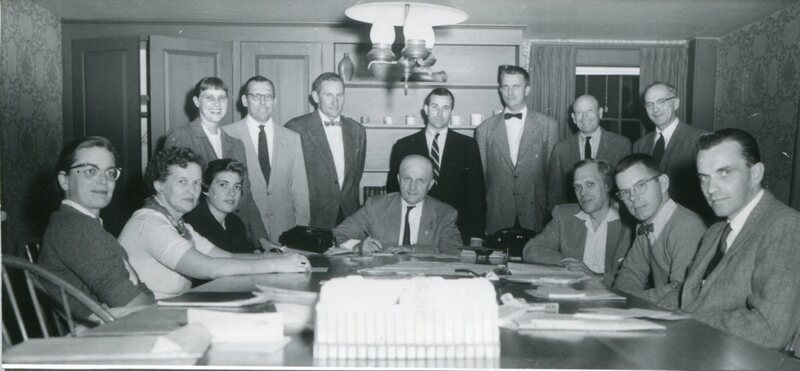
A photo of the Community Fund Committee appeared in the Oct. 17, 1957 edition of the Shoreline Times Newspaper. The fund was launched in the 1950s to help centralize fundraising for the town's non-profit agencies.
Members (seated):Betty Stevens, Marge Gruiles, Audrey Doolittle Whittemore, Mike Pochan, chairman; Alex Hotchkiss, Bill Farrar, Dan Reinhardsen
(standing): Ruth Hill, Rich Curtiss, Stanley Barnes, Robert Orcutt, Hugh Jones, Ben Weissman, Dick Gruptil
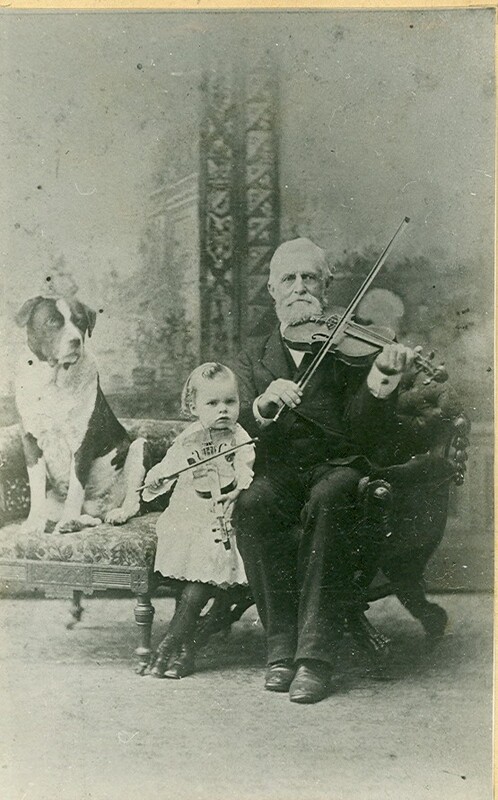
Captain Oliver Brooks, lighthouse keeper at Faulkner's Island, playing the violin along with his grandson, Oliver Husted. His dog, known as Tige, sits nearby.
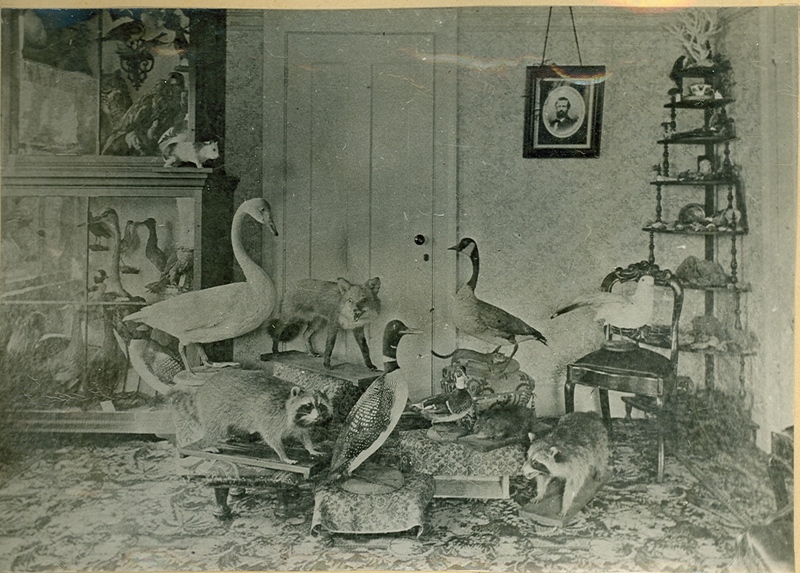
A room in the lighthouse keeper's home on Faulkner's Island features a collection of taxidermy specimens. Captain Oliver Brooks, the lighthouse keeper from 1851 to 1882, was known for his wide-ranging interests including musical instruments, ornithology and taxidermy. A portrait of the Captain hangs on the wall.
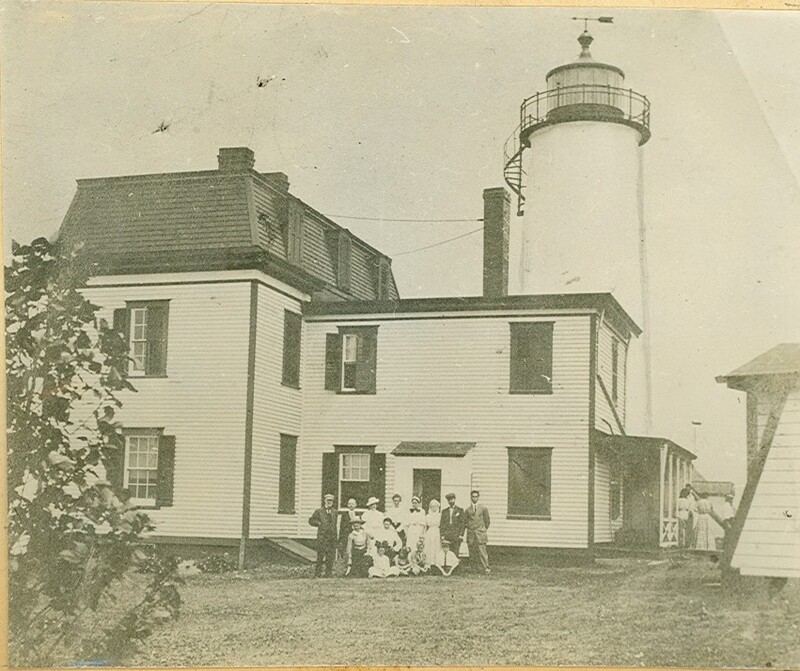
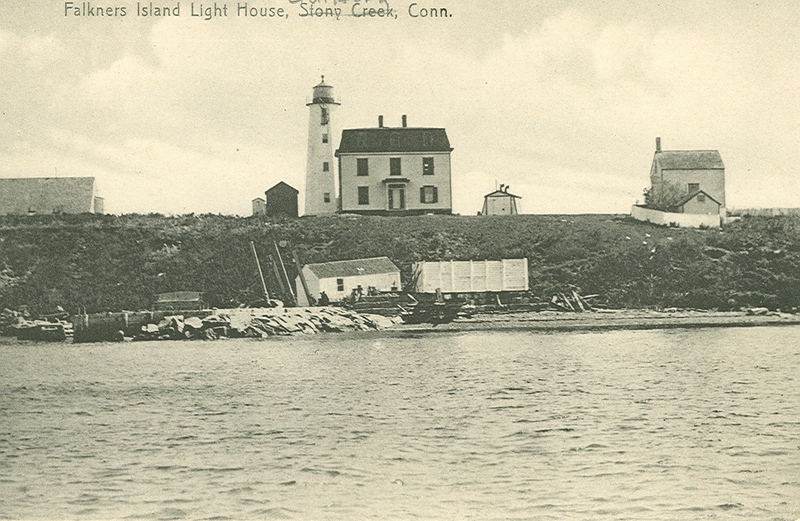
Faulkner's Island Lighthouse and home were first built in 1802. The outbuildings include workshops, chicken coops, a tool house, and siren and engine rooms. The lighthouse itself is typical of others built before 1830. It is 50 feet high and octagonal in shape. The home burnt down in 1976 and erosion has brought the lighthouse much closer to the edge of the island.
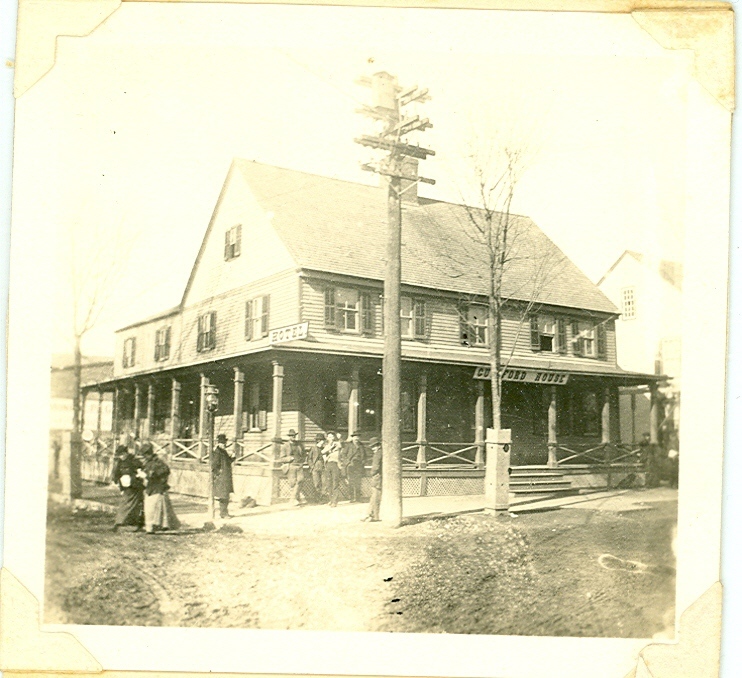
Dr. Joel Canfield, settled in the town of Guilford in 1828 after living briefly in North Guilford. He was married to Lucretia Benton. Their home was located on 78 Church Street, one of the earliest buildings on the block. (source: Sarah Brown McCullogh's Guilford: A Walking Guide)
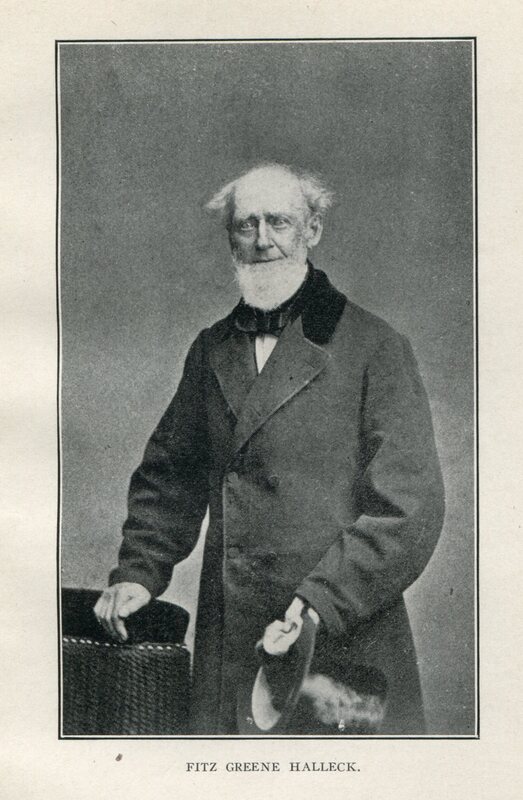
Guilford resident Fitz-Greene Halleck was a poet, essayist and Byron scholar. Born in Guilford, Halleck moved to New York at age 21 and worked in banking. He became the private secretary of philanthropist John Jacob Astor and he was a member of a group of New York writers known as the Knickerbocker Group, which included James Fenimore Cooper and Washington Irving. Halleck later retired in Guilford, where he lived with his sister.
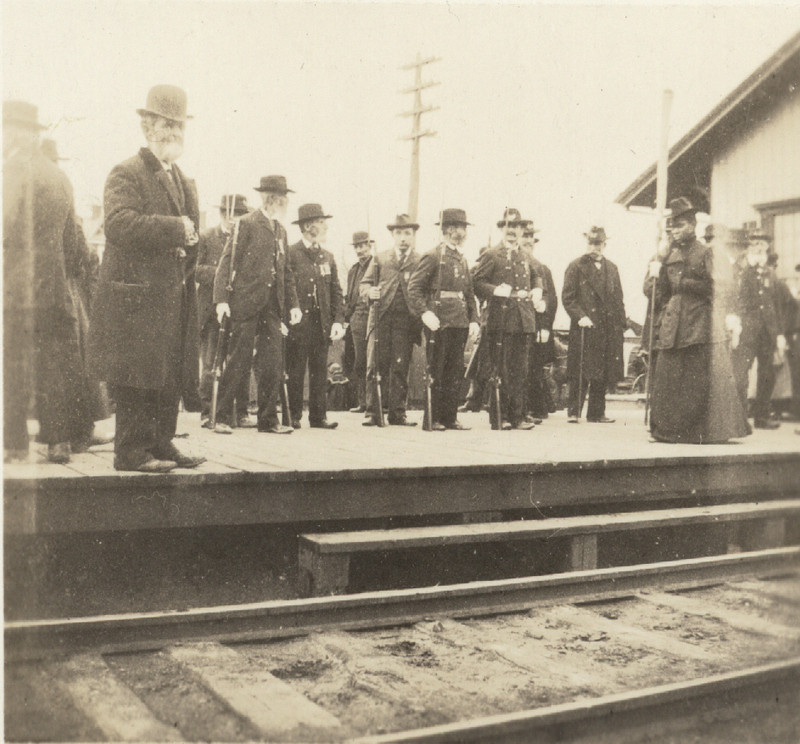
Civil war veterans and honored guests, Roger Davis, Mr. Wheatley, Connie Shea, Coxie Sullivan, A.G. Somers, William Hull, and Capt. Charles R. Griswold see off the Battery Boys at the railroad station.
The festivities leading up to the send-off was one of the largest gatherings of residents in the late 19th century, with more than 1,500 of Guilford's 2,500 citizens in attendance. A parade took the Battery Boys from the Guilford Green to the railroad station where they boarded for Niantic in preparation for the Spanish-American War.
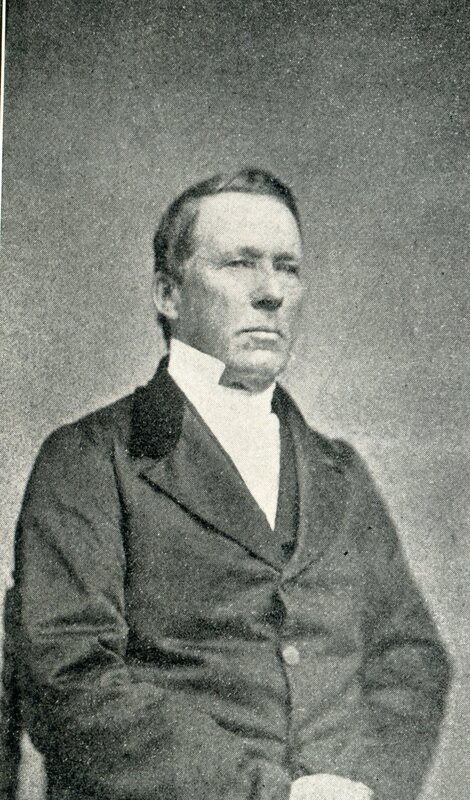
Henry Fowler, 1812-1894, was married to Sally Hart and had four children. Fowler served as a Justice of Guilford as well as a delegate to the state of Connecticut's Assembly.
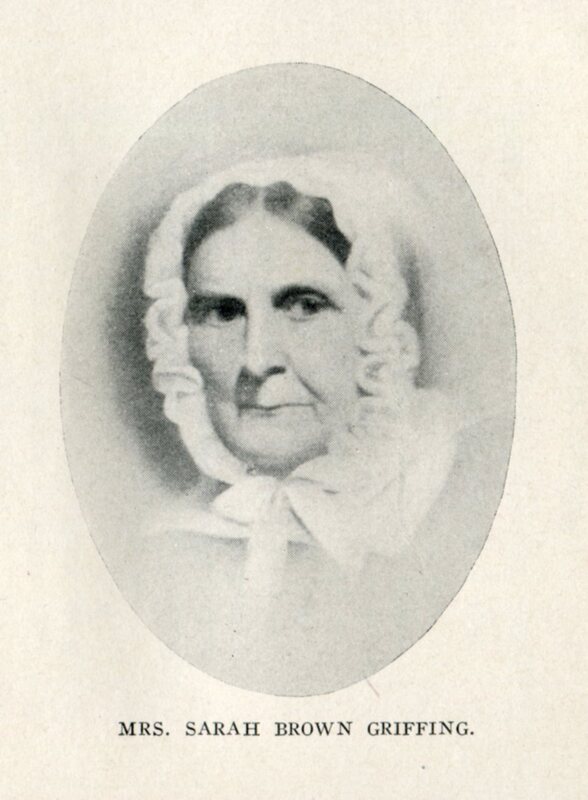
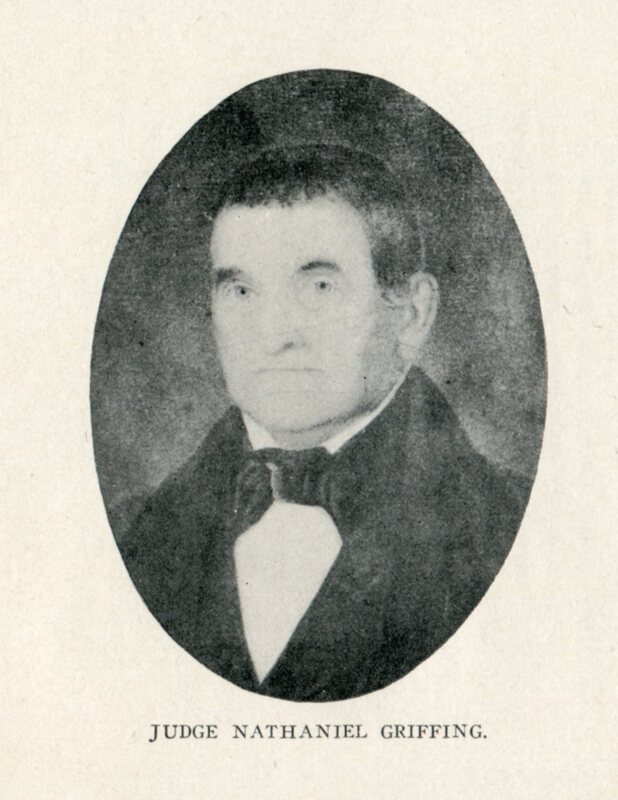
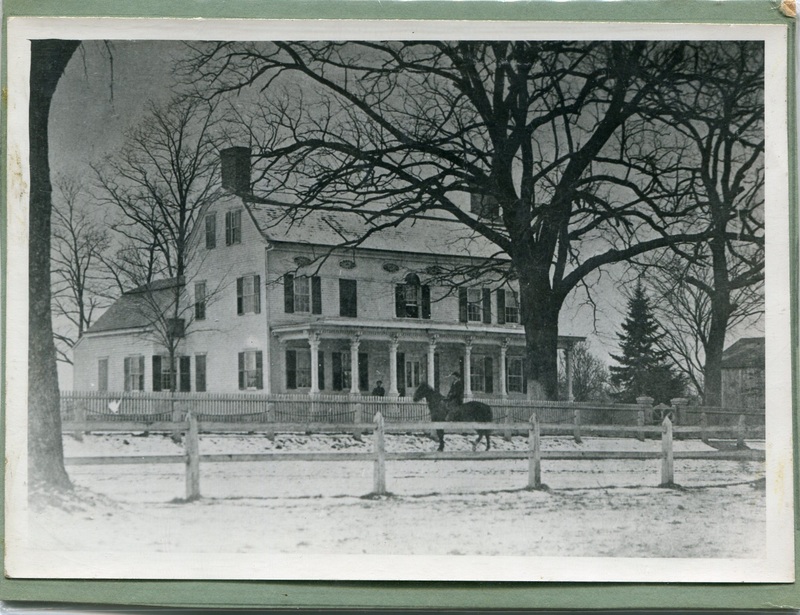
Mrs. Sarah Brown Griffing was married to Judge Nathaniel Griffing and lived at 6 Fair Street in Guilford.
" Judge Griffing, who graduated from Yale in 1786,
was a justice of the New Haven Colony Court and active in town affairs until his death in 1845. His widow, Sarah Brown, who survived all but one of their seven
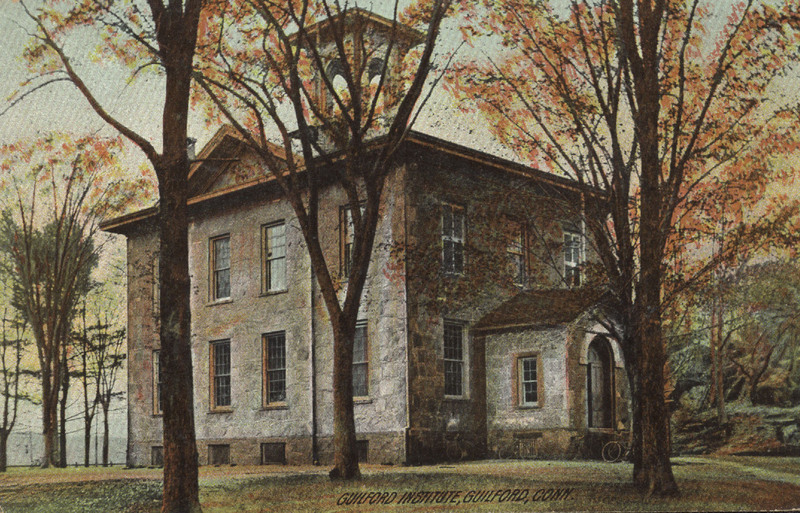
children, lived here until her death in 1865, aged ninety-five. In 1855 her gift of $10,000 made possible the founding of the Guilford Institute at 120 North Fair
Street, " (source: McCullogh's Guilford: A Walking Guide).
Judge Nathaniel Griffing married Sarah Brown and resided at 6 Fair Street, a home previously owned by Griffing's brother Joel. Griffing was a 1786 graduate of Yale and a New Haven Colony court justice. After his death in 1845, Griffings' wife, Sarah Brown Griffings went on to donate $10,000 to establish the Guilford Institute a school at 120 North Fair Street. (source: Sarah Brown McCullogh's Guilford: A Walking Guide.)
Mrs. Ruth Hart Landon, 1790-1855, was the daughter of Deacon Thomas Hart and Mary Parmelee. Ruth married George Landon and the couple had five children together.
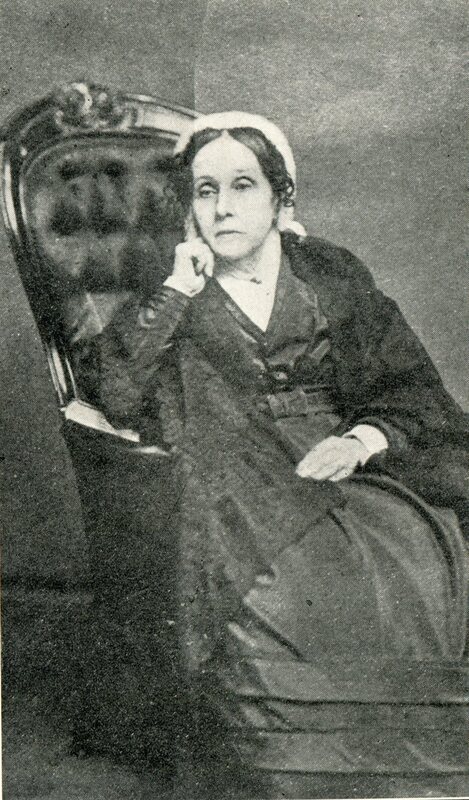
Miss Mary Dutton was the daughter of the Reverend Aaron Dutton, the pastor of the First Congregational Church from 1806 to 1841. The family resided at 37 Park Street. Reverend Dutton was dismissed as pastor from the First Congregational Church in 1841 for his anti-slavery views. (source: Sarah Brown McCullogh's Guilford: a Walking Guide)
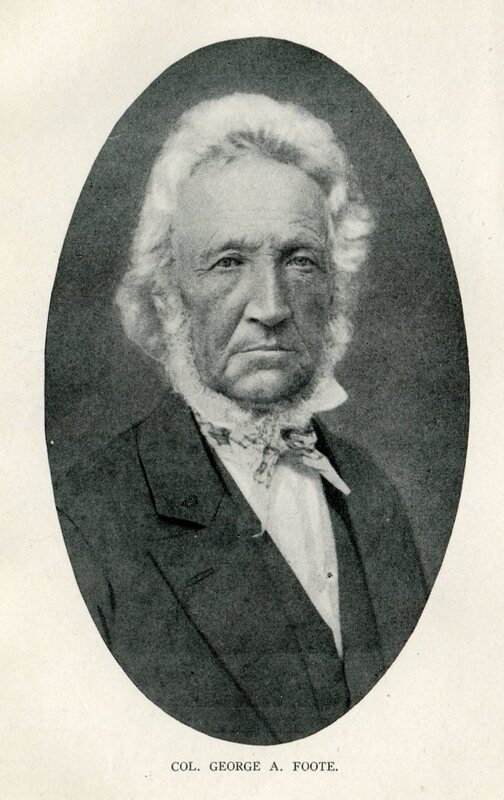
Colonel George A. Foote, 1790 - 1878, was the son of Eli Foote and Roxana Ward Foote. He married Eliza Spencer in 1829. The couple had 10 children together.
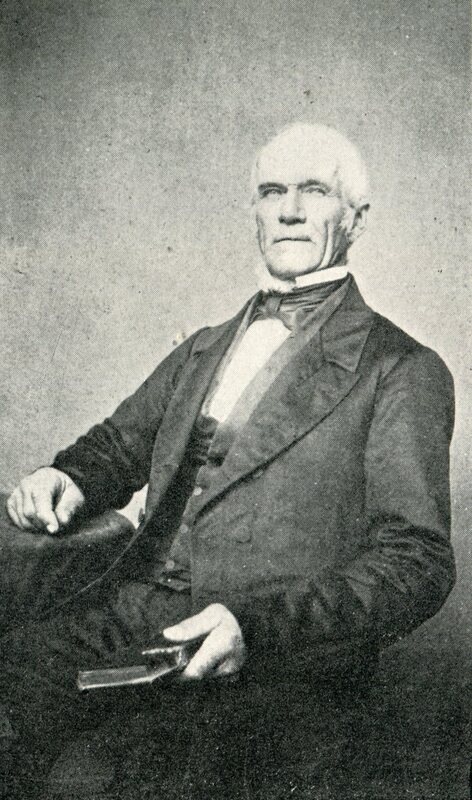
Jonathan Parmelee, 1798-1880, was the son of Jonathan and Elizabeth Hart Parmelee. He married Mary Dudley in 1819 and the couple had five children together.
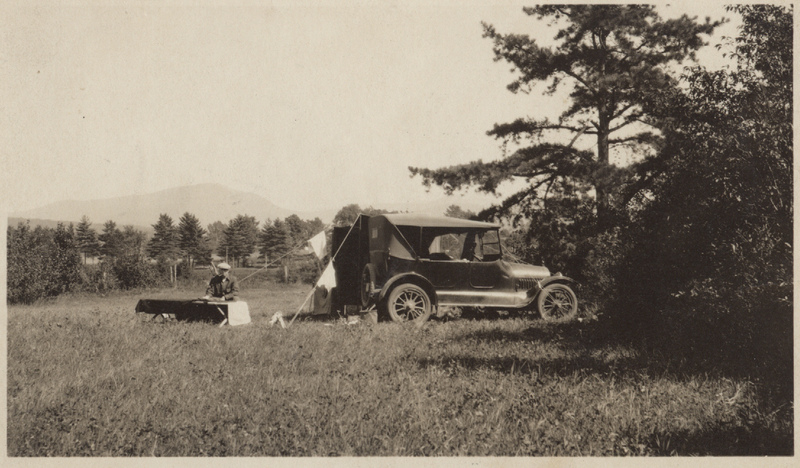
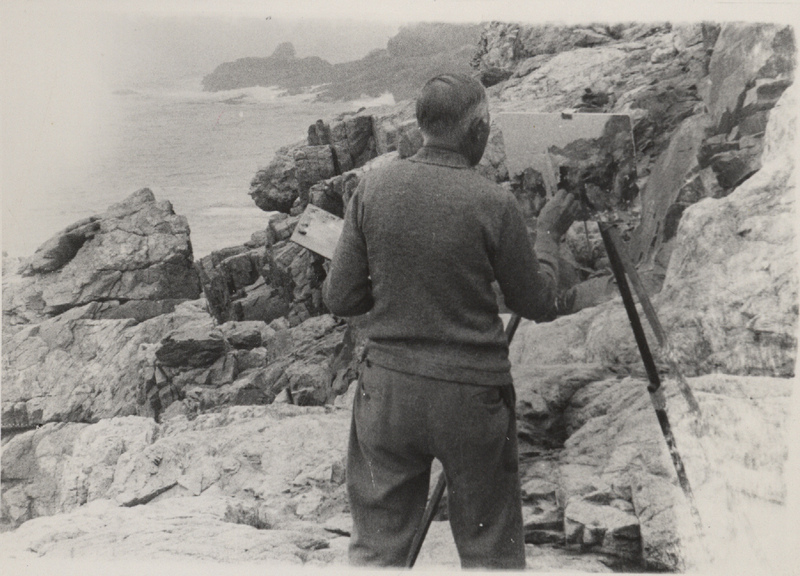
From the Hartford Courant, "Hubbard, who was born in 1876 and died in 1951, was the ninth generation of his family to live in town. He captured Guilford's history in books he wrote, and in landscape paintings dotted with graceful trees, gentle-looking cows and proud old wooden houses."
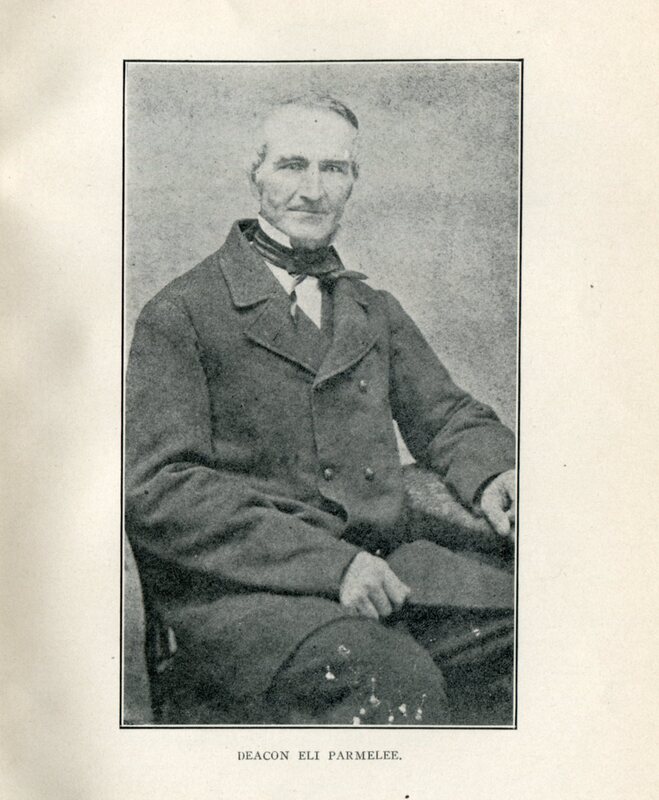
Deacon Eli Parmelee, 1808-1882, was the son of Jonathan and Elizabeth Hart. In 1830, he married Betsey Ann Benton. The couple had two children together and resided at 72 Church Street in Guilford. Eli Parmelee was a deacon at the First Congregational Church and a Republican deputy for Guilford to the General Court (source: Guilford: A Walking Guide by Sarah Brown McCulloch)
Daniel Hand, 1801 - 1891, was the son of Daniel and Artemisia Hand. Hand married Elizabeth Ward in 1829 and the couple had one daughter, Elizabeth Augusta, who died at age 12. The Hand Family lived in Augusta, Georgia for several years while Daniel Hand was head of his uncle's wholesale grocery business. He formed a partnership with a George W. Williams, a southerner. During the Civil War, Hand was arrested three times for being a spy while traveling to the north on business. When the war ended, Hand returned to Connecticut and later built his home on 47 Fair Street. His business partner surprised him with company profits of $1.5 million dollars. Hand gave much of the money to charity including the American Missionary Society for the education of southern blacks. (source: Sarah Brown McCulloch's Guilford: A Walking Guide).
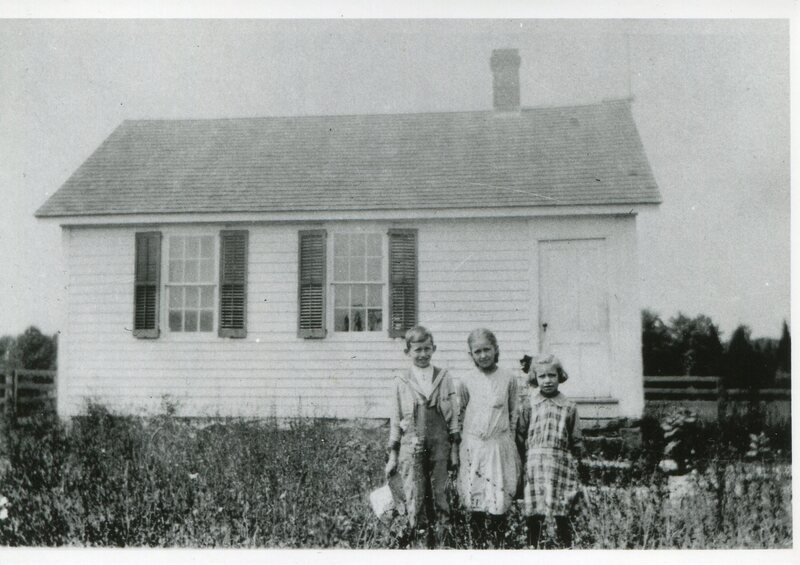
Students at the Clapboard Hill School, 1918
Left to right: H. Philip Dudley, Edith B. Nettleton and Elizabeth Nettleton Theiss. The second photo was taken in 1988 of the same group. One of the students, Edith B. Nettleton, was the librarian at Guilford Free Library for 44 years. The Historical Room at GFL is named in her honor.
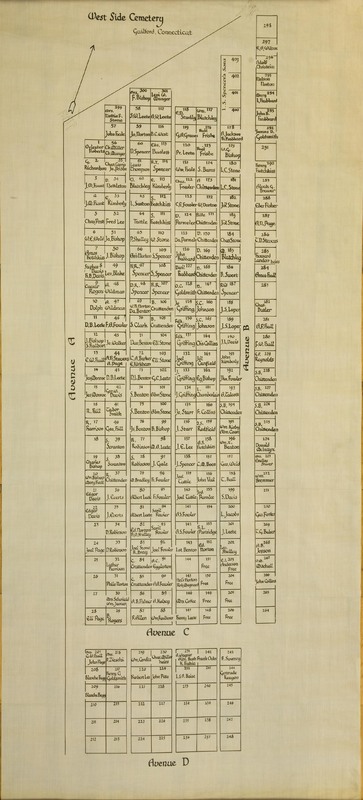
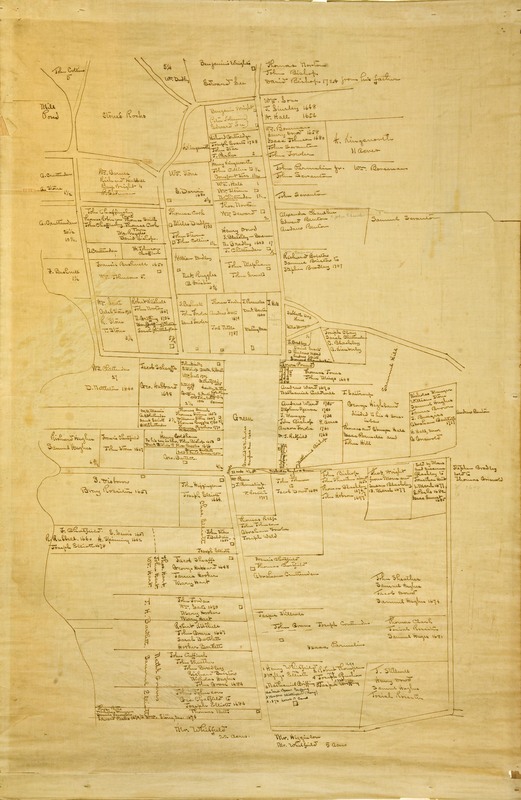
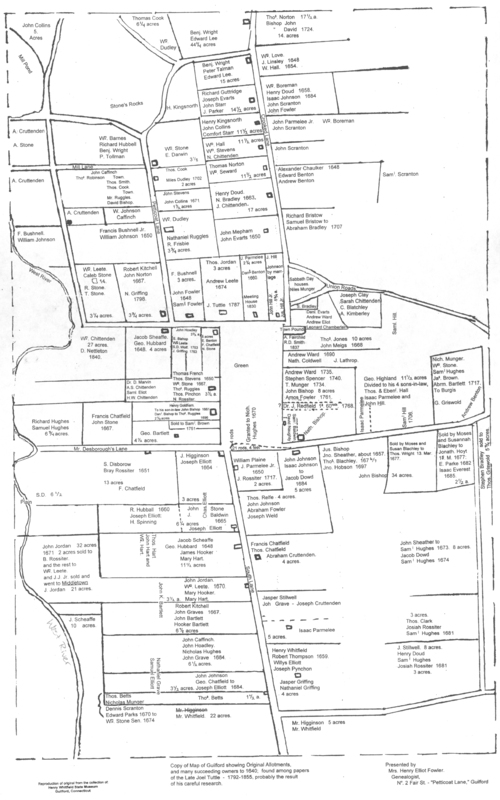
This map was found among the papers fo Joel Tuttle, 1792-1855. It records the original allotments in Guilford and succeeding owners up to 1640. It is assumed to be the product of Mr. Tuttle's research.
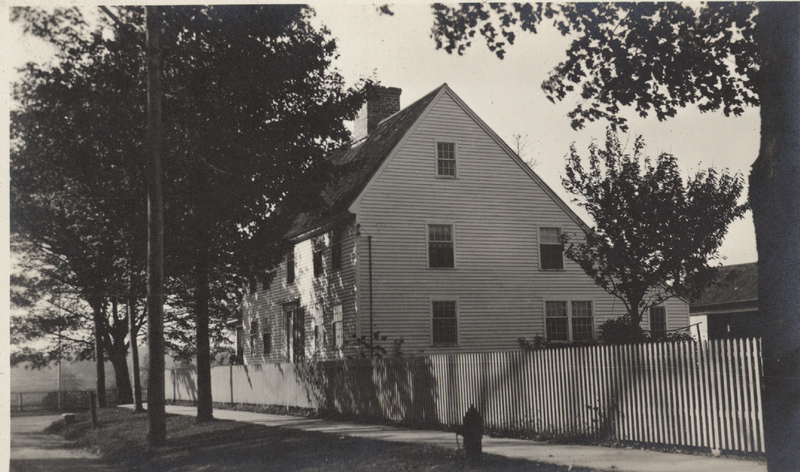
Regicides Cellar, 6 Broad St. The land on which this house stands was originally part of the homelot of Governor William Leete. It is thought that the cellar of the barn behind the house is the site of Leete's house. From the plaque on the barn: "Here in June 1661, William Leete, then Governor of New Haven Colony concealed for three days Whalley and Goffe, two of the judges who signed the death warrant of Charles I of England. They were sought by emissaries of Charles II who after the Restoration ordered the regicides beheaded."
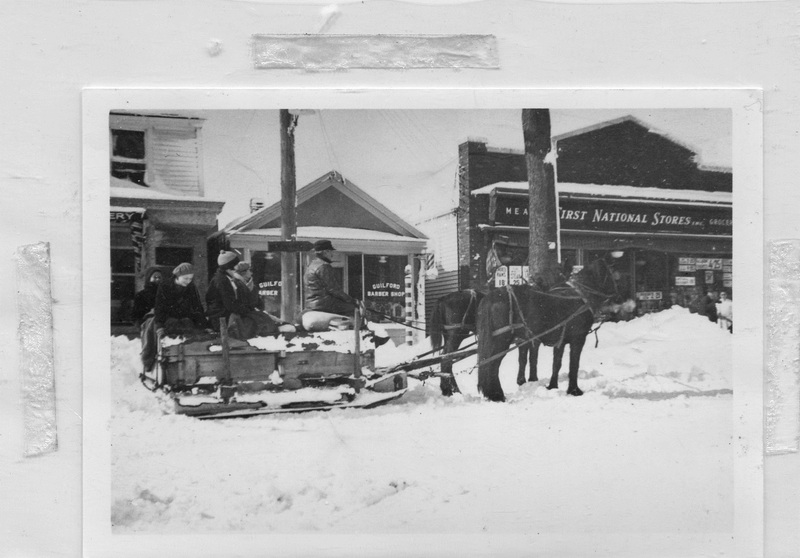
As told by Edith B. Nettleton: The sled of William A. Dudley, his wife Mary is seated behind the driver. Elizabeth Nettleton, Edith Williams Stone, Esther Duddley Prisloe on sled. Edith B. Nettleton and Emma Dudley McSweet in First National Store.
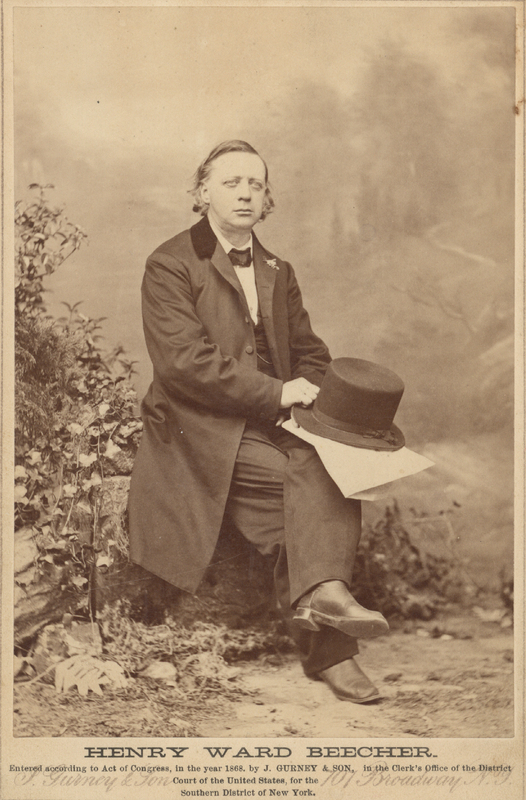
Henry Ward Beecher was the son of Reverend Lyman Beecher and Roxana Foote. According to the New York Times, " The Reverend Henry Ward Beecher (1813-1887) was the most popular and controversial Christian minister in the United States for more than three decades, from the 1850s through the 1880s."
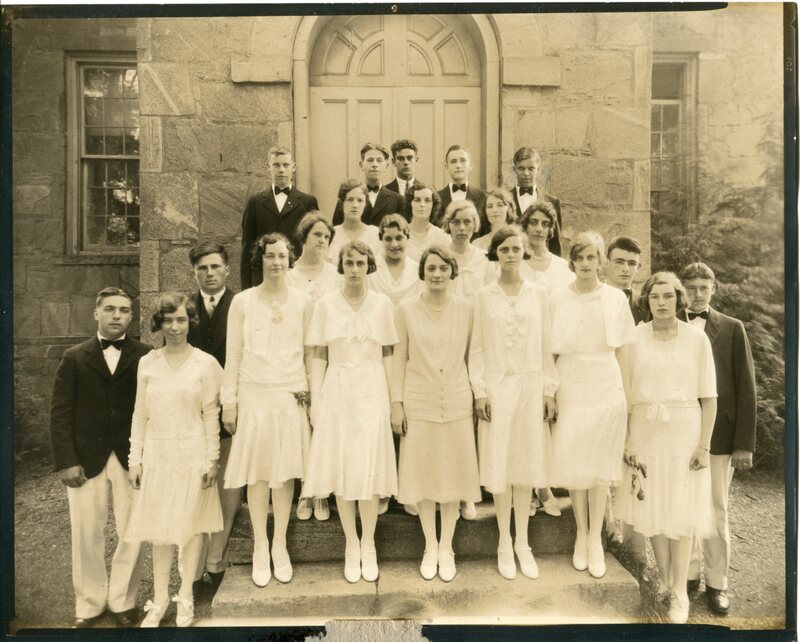
Members of the Class of 1930: (alphabetical order, not order of photo) John Thomas Beattie, Janice Beckwith, Mary Elizabeth Bergen, Hazel Evelyn Buell, Frelove Catherine Burr, Frederick Gibson Carr, Lena Dorothy Cianciolo, Elizabeth Kathryn Dolan, Arnold Leslie Fowler (pictured back row, far right), Alvin Adoph Kamenski, Helen Ann Miller, Vera Ward Parmelee, Grace Marie Rossiter, Kenneth John Shepard, Vera Millicient Smith, Henry Rolf Spencer, Carlos Marquard Stevens, Harry Frances Sullivan, Eleanor Pauline Thrall, Clara Gloria Tonelli, Ruth Iola Walston, and Richard Spencer Wilcox.
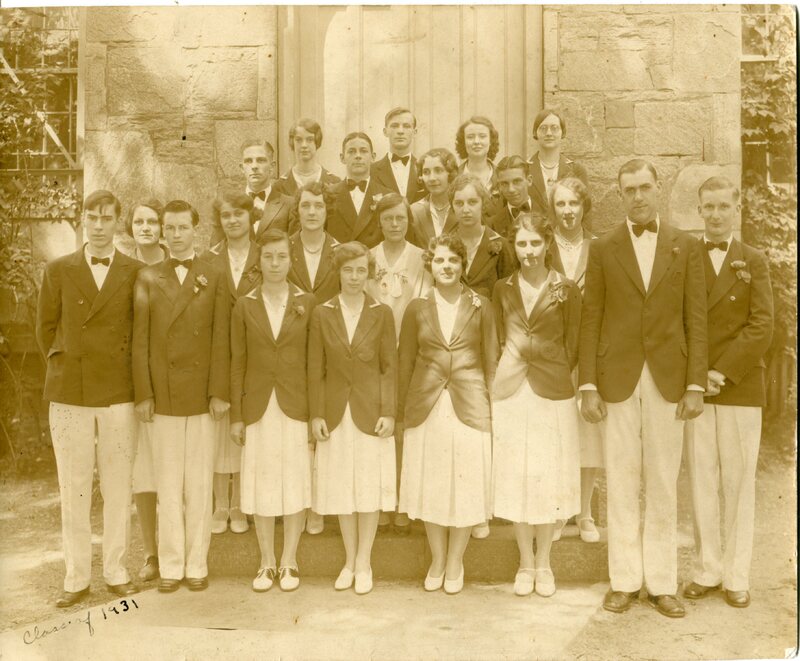
Guilford High School, Class of 1931 (front row, left to right): Fred Markham, George Spaulding, Genie Pitts, Ruth Putney - "Mrs. Revet," Frances Cianciolo, Constance Murusky, Herman Kintz and Warren Lindquist. 2nd Row: Edith Smith, Marjorie Beecher, Marion Dolan, Lou Fullington (class adviser), Helen Schielke, and Clara Tetzlaff. 3rd row: Roger Kiesel, Richard Morse, Elsie Rebuzzini and Robert Tassis. 4th row: Florence Walston, Ronald Whiteman, Elinor Haggart, and Effie Goad
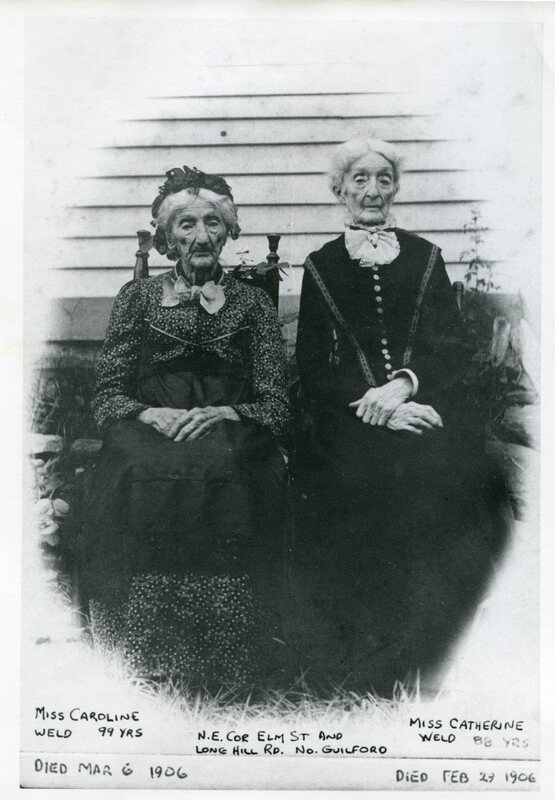
Miss Caroline Weld, age 99, and Miss Catherine Weld, age 88, are pictured sitting outside at the northeast corner of Elm Street and Long Hill Road in North Guilford. Catherine Weld died February 24, 1906; and her sister Caroline Weld died March 6, 1906. They were the daughters of Daniel Weld and Submit Rossiter. The Weld family lived in North Guilford.
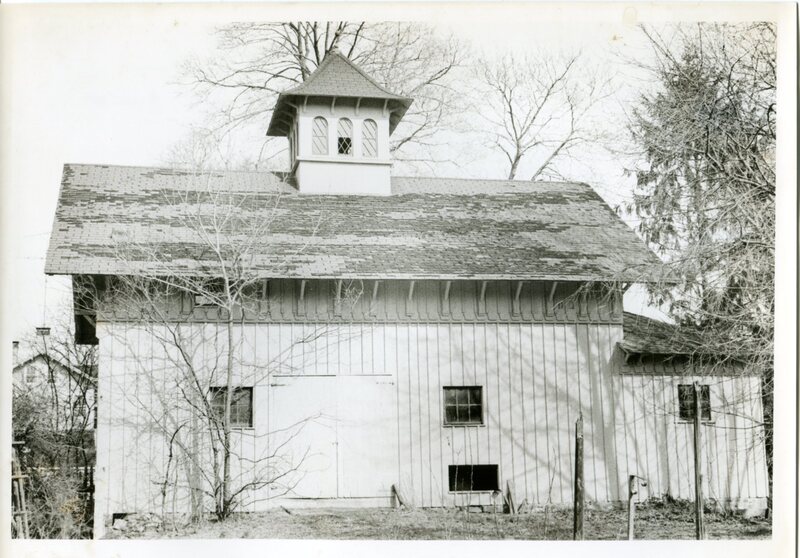
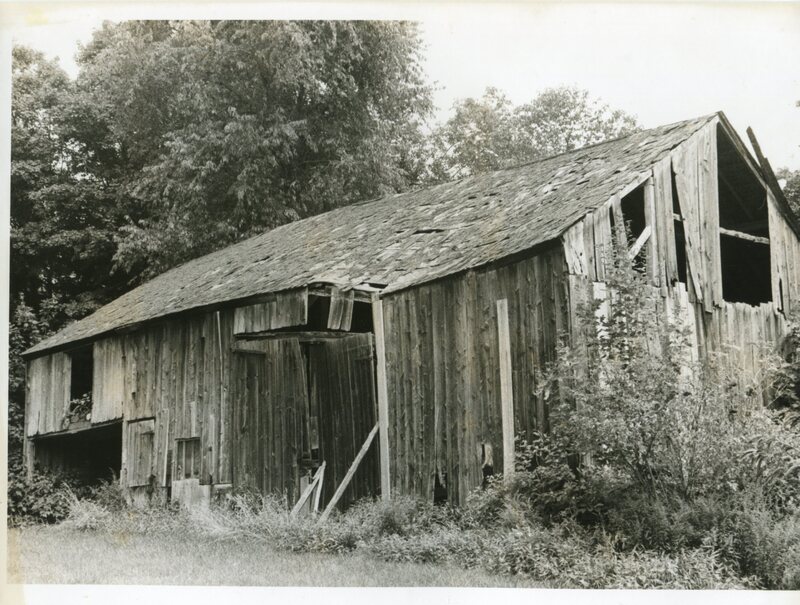
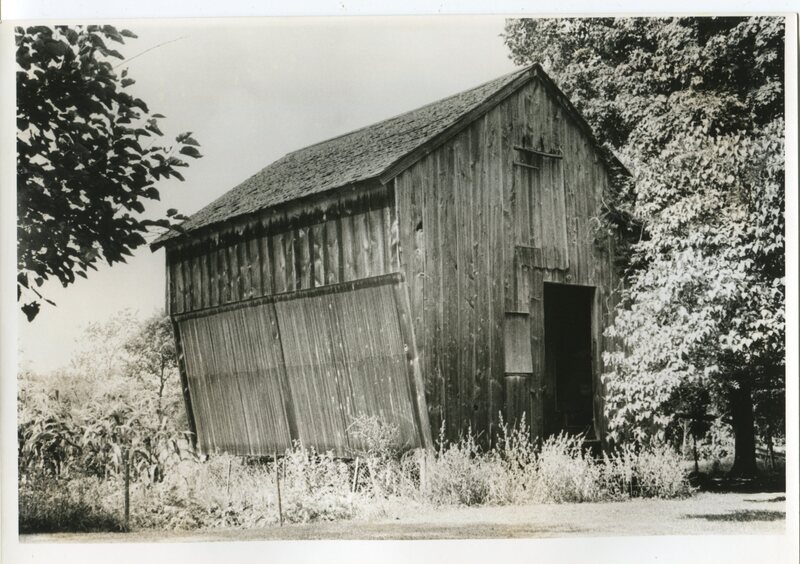
Corn Cribs like the one pictured here in Guilford were used to dry and store corn and other grains. A typical building has slatted walls that slope outward.