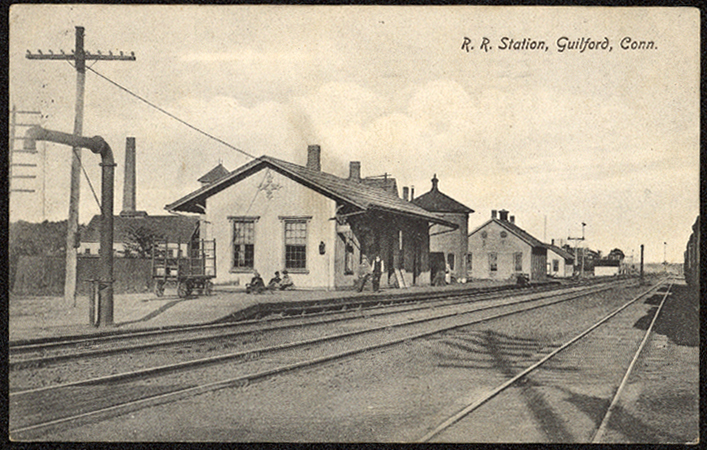
The Railroad Station in Guilford. The original building was later replaced by Amtrak. The correspondence on the postcard is from Frances Aston of Guilford to Fred Aston of New Haven, Connecticut. It was mailed August 31, 1909.
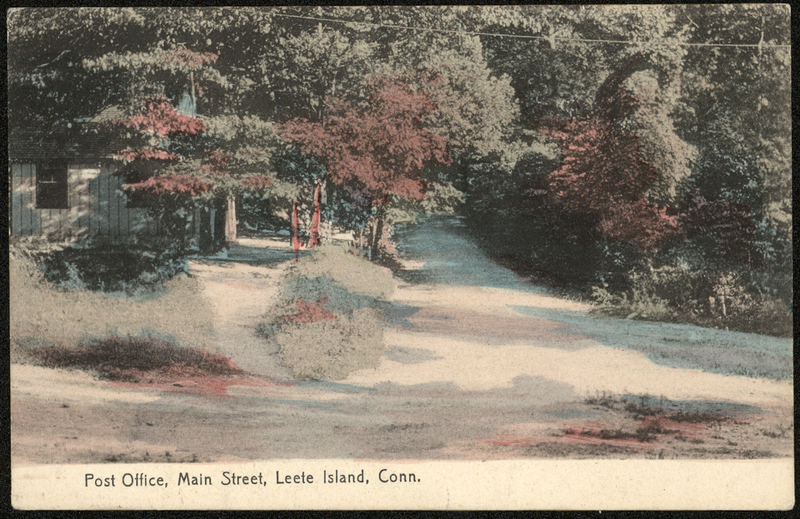
A postcard of the Post Office located on Main Street of Leete's Island. The card was mailed April 17, 1911 to Mr. Fred Aston in New Haven, Connecticut.
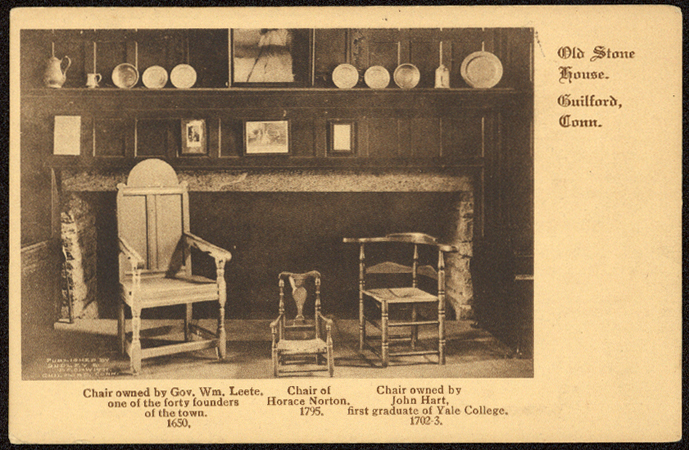
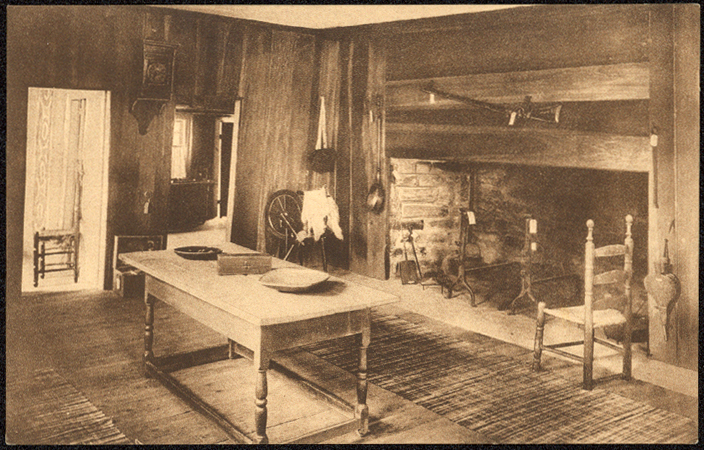
A postcard from the interior of the Old Stone House which is now called the Henry Whitfield House. One of the three chairs shown, dated 1650, was owned by Gov. William Leete who was one of the forty founders of Guilford.
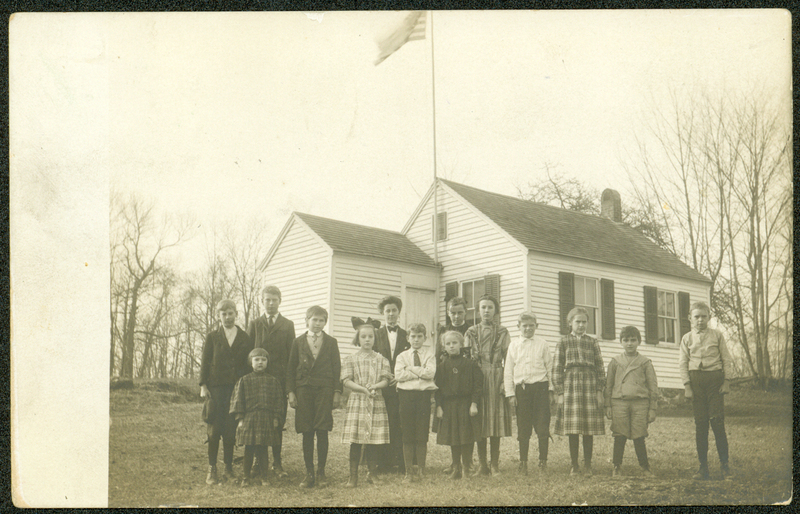
A postcard of Miss Chittenden's class at a school located on Long Hill Road, north of Route 80. The postcard was sent from the teacher, Miss Isabel Chittenden to Miss Frances Hubbard of Guilford. Miss Chittenden's note on the card which was mailed December 29, 1910, includes the message "My scholars and I wish you a Happy New Year."
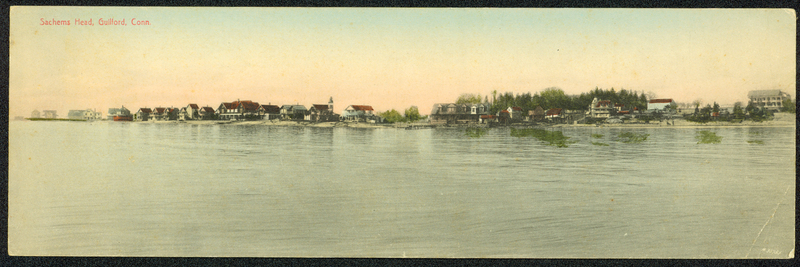
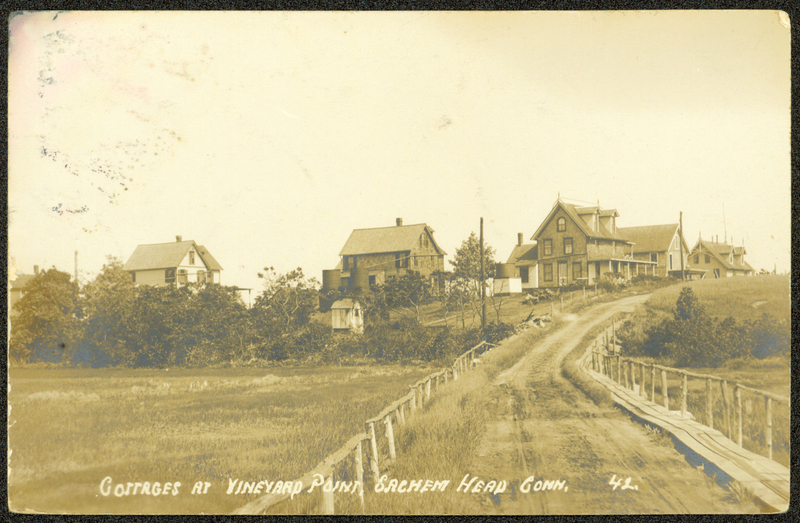
A postcard of the Cottages at Vineyard Point, Sachem Head, in Guilford, Conn.
Several cisterns are shown in this picture. The cottages were unable to have wells since they were built on stone. Instead cisterns were used to collect rainwater for the inhabitants of the cottages. However this meant that a dry summer meant no fresh water.
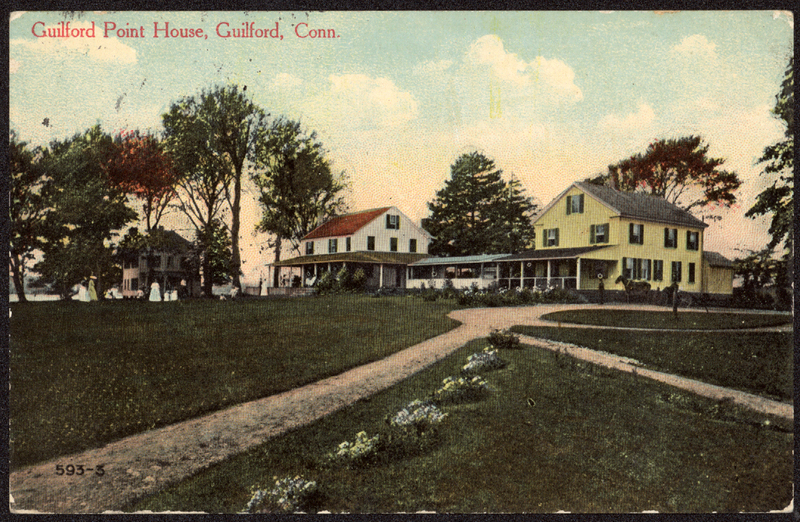
Guilford Point House Postcard. The card, dated October 17, 1912, is addressed to Mr. Alfred C. Dodd and reads:
"Just a line from Guilford. Cold weather and wind first this a.m. The air is fine and lovely. Hope you are getting along well. Yours (?) C.E.A.
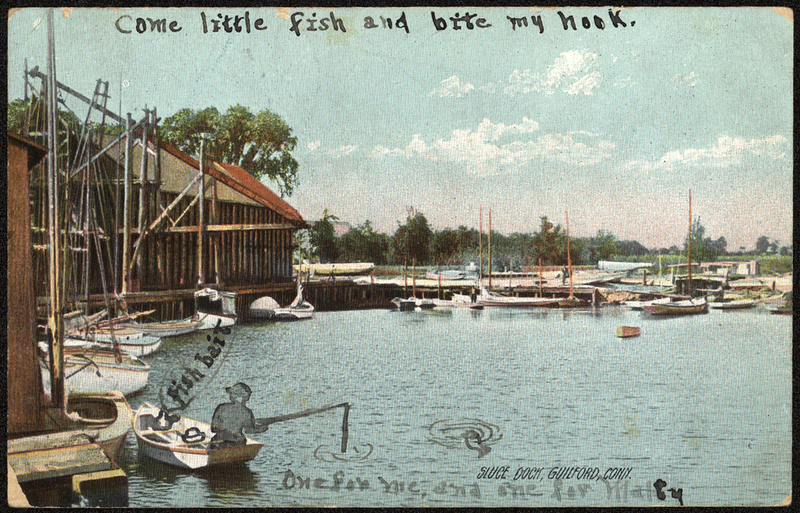
A color postcard of Guilford's Sluice Dock. The sender of the postcard added "Come little fish and bite my hook." at the top of the postcard and "one for me and one for Maisy" along with the drawing of the fisherman and his catch. The back of the postcard is addressed to Mrs. S.W. Gilbert, Swansey Factory, Keene, NH and reads:
Hello Aunty Gilbert!
You had ought to have been here today. I made home candy and it was good too! If I do have to say it my self - your time must be pretty well occupied that can't send a postal once in a while, but course if you were in Stafford Springs I would understand all about it. (ahem!) Take good care of your self. But don't do anything rash. Lots of love, name (unidentified).
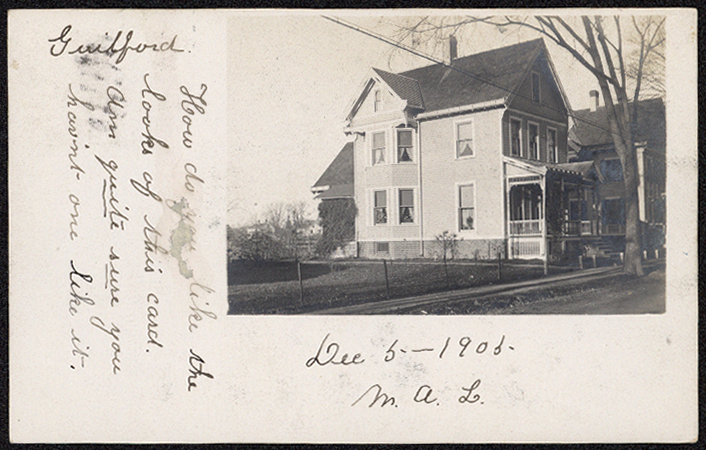
The inscription on the postcard is dated December 6, 1906. The note on the card reads: "Guilford: How do like the looks of this card. Am quite sure you haven't one like it."
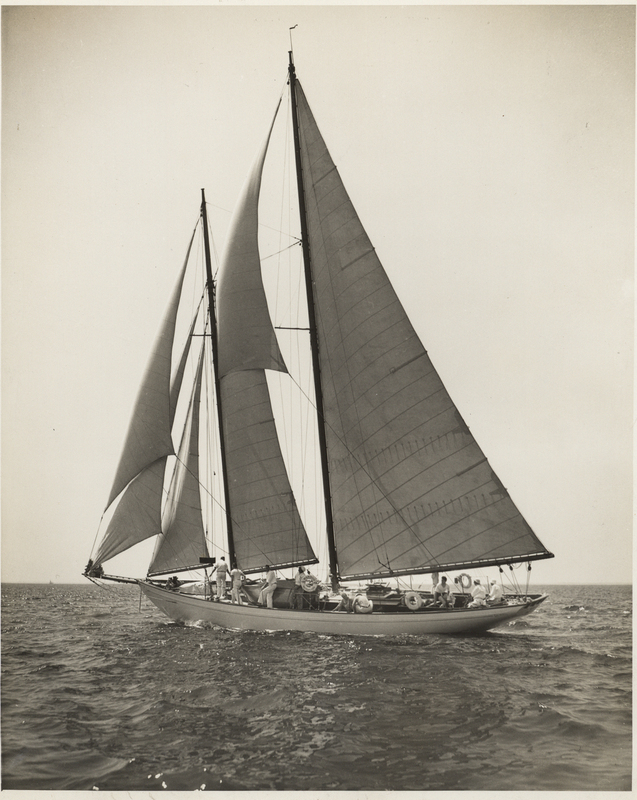
The sailing yacht, Mandoo, was owned by D. Spencer Berger, treasurer of Berger Brothers, a foundation manufacturer that incorporated in 1914, of New York and New Haven. Berger had a summer home on Vineyard Point in Guilford.
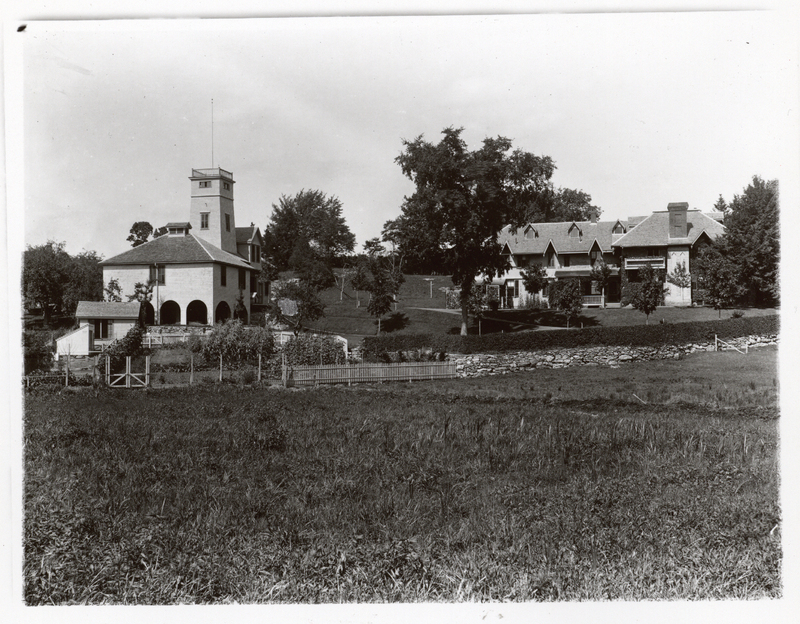
Rear of main dwelling and stable as viewed from the Lower Road. Gablehurst was built ca 1859 by Rev. E. Edwin Hall for his wife, a native of Switzerland. Subsequent owners added modern amenities as they were available. In 1906 it was purchased by Edward C. Seward. "It had a great big stable with a tower on it. We had four straight stalls and two box stalls, a harness room, a carriage room with a number of carriages in it. There was originally a water tank in the tower but we got hitched up to city water pretty soon." (from the oral history with grandson W. Saxton Seward, 1981) At the time it was destroyed by fire in June, 1925, it was owned by Mrs. E. C. Seward, and was leased to the Cameron School. The School had been at Pipe Bay (Indian Cove) at the camp of Mrs. Theodora Hooker until Mary Beattie secured Gablehurst. The carriage house was renovated in 1998 and the entrance moved from York Street (Boston Post Road) to 303 North River Street.
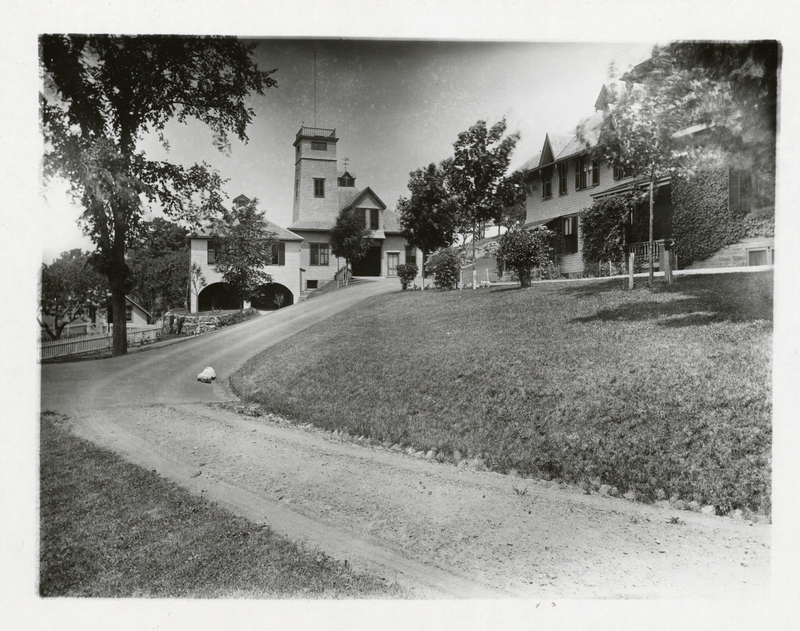
Gablehurst, view of stable and water tower on left, granite stone dwelling on right. Gablehurst was built ca 1859 by Rev. E. Edwin Hall for his wife, a native of Switzerland. Subsequent owners added modern amenities as they were available. In 1906 it was purchased by Edward C. Seward. "It had a great big stable with a tower on it. We had four straight stalls and two box stalls, a harness room, a carriage room with a number of carriages in it. There was originally a water tank in the tower but we got hitched up to city water pretty soon." (from the oral history with grandson W. Saxton Seward, 1981) At the time it was destroyed by fire in June, 1925, it was owned by Mrs. E. C. Seward, and was leased to the Cameron School. The School had been at Pipe Bay (Indian Cove) at the camp of Mrs. Theodora Hooker until Mary Beattie secured Gablehurst. The carriage house was renovated in 1998 and the entrance moved from York Street (Boston Post Road) to 303 North River Street.
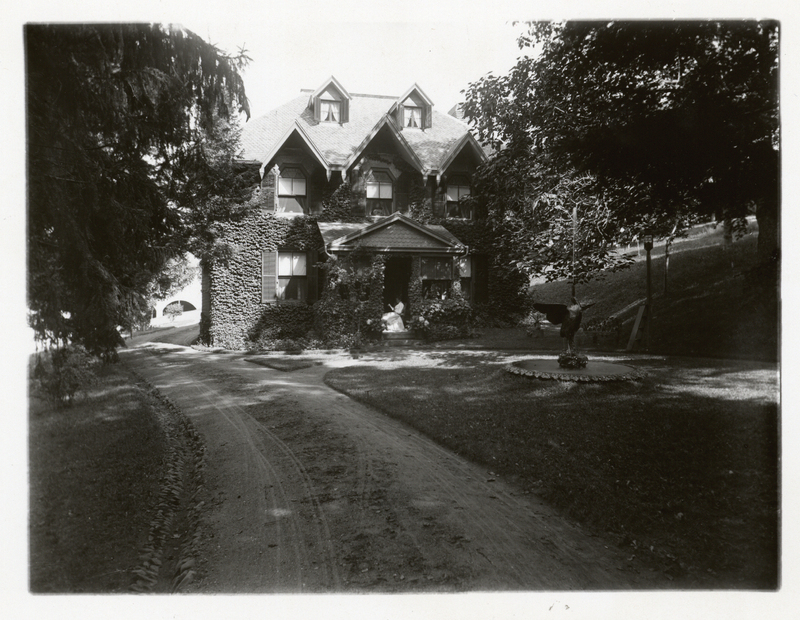
Gablehurst: Front of the main dwelling view. Gablehurst was built ca 1859 by Rev. E. Edwin Hall for his wife, a native of Switzerland. Subsequent owners added modern amenities as they were available. In 1906 it was purchased by Edward C. Seward. "It had a great big stable with a tower on it. We had four straight stalls and two box stalls, a harness room, a carriage room with a number of carriages in it. There was originally a water tank in the tower but we got hitched up to city water pretty soon." (from the oral history with grandson W. Saxton Seward, 1981) At the time it was destroyed by fire in June, 1925, it was owned by Mrs. E. C. Seward, and was leased to the Cameron School. The School had been at Pipe Bay (Indian Cove) at the camp of Mrs. Theodora Hooker until Mary Beattie secured Gablehurst. The carriage house was renovated in 1998 and the entrance moved from York Street (Boston Post Road) to 303 North River Street.
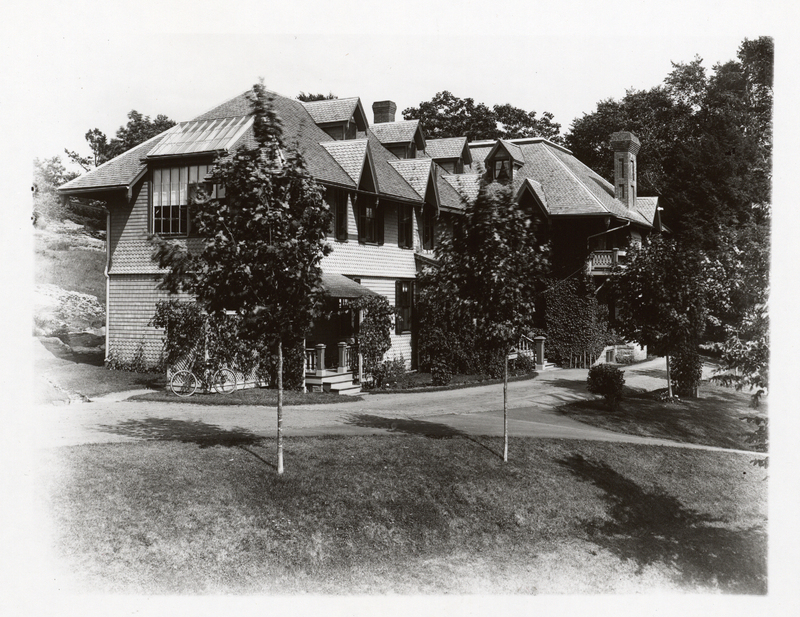
Gablehurst: Rear of main dwelling. Gablehurst was built ca 1859 by Rev. E. Edwin Hall for his wife, a native of Switzerland. Subsequent owners added modern amenities as they were available. In 1906 it was purchased by Edward C. Seward. "It had a great big stable with a tower on it. We had four straight stalls and two box stalls, a harness room, a carriage room with a number of carriages in it. There was originally a water tank in the tower but we got hitched up to city water pretty soon." (from the oral history with grandson W. Saxton Seward, 1981) At the time it was destroyed by fire in June, 1925, it was owned by Mrs. E. C. Seward, and was leased to the Cameron School. The School had been at Pipe Bay (Indian Cove) at the camp of Mrs. Theodora Hooker until Mary Beattie secured Gablehurst. The carriage house was renovated in 1998 and the entrance moved from York Street (Boston Post Road) to 303 North River Street.
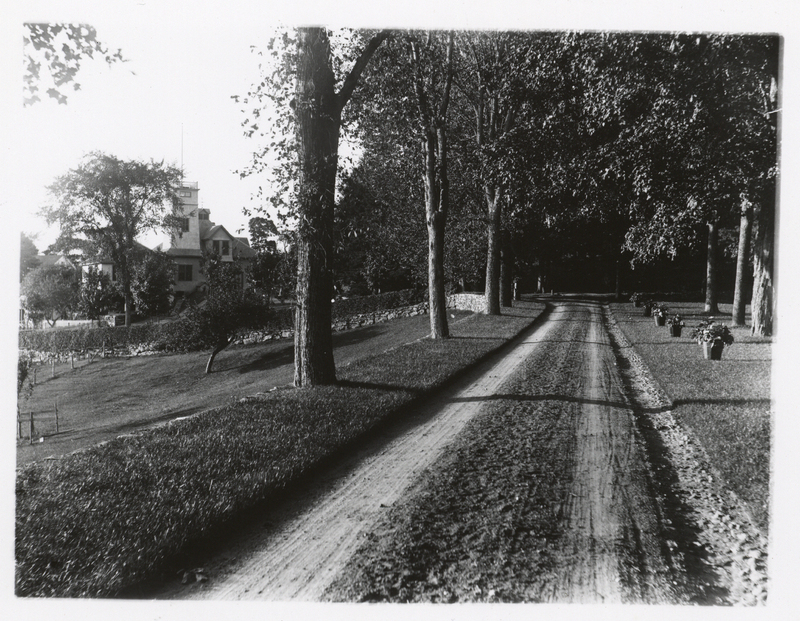
Gablehurst: Entrance through an avenue of old elms and approach to the main dwelling. Gablehurst was built circa 1859 by Rev. E. Edwin Hall for his wife, a native of Switzerland. Subsequent owners added modern amenities as they were available. In 1906 it was purchased by Edward C. Seward. "It had a great big stable with a tower on it. We had four straight stalls and two box stalls, a harness room, a carriage room with a number of carriages in it. There was originally a water tank in the tower but we got hitched up to city water pretty soon." (from the oral history with grandson W. Saxton Seward, 1981) At the time it was destroyed by fire in June, 1925, it was owned by Mrs. E. C. Seward, and was leased to the Cameron School. The School had been at Pipe Bay (Indian Cove) at the camp of Mrs. Theodora Hooker until Mary Beattie secured Gablehurst. The carriage house was renovated in 1998 and the entrance moved from York Street (Boston Post Road) to 303 North River Street.
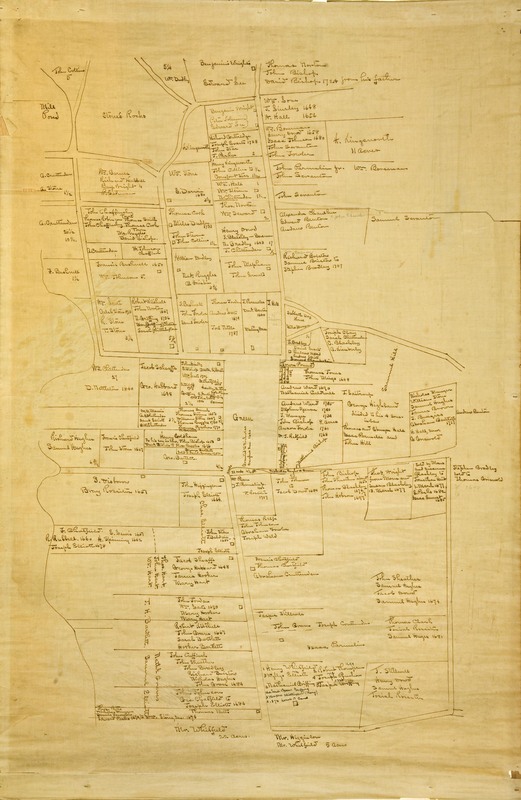
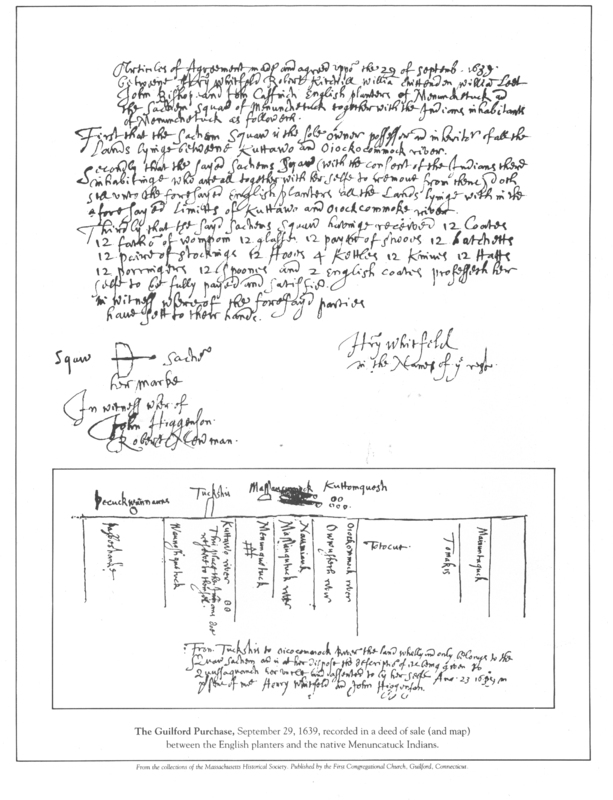
The Guilford Purchase agreement, September 29, 1639, recorded in a deed of sale and map between the English planters and the native Menuncatuck Indians.
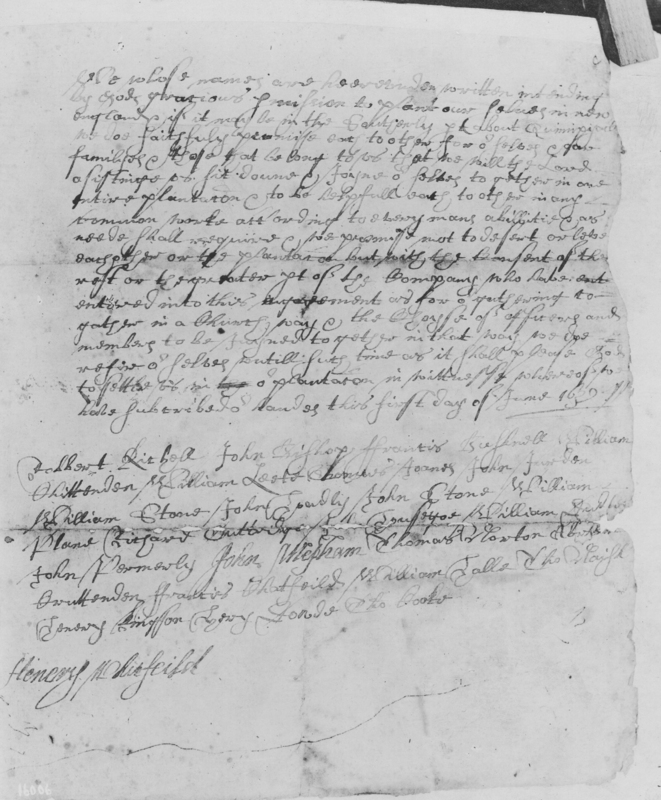
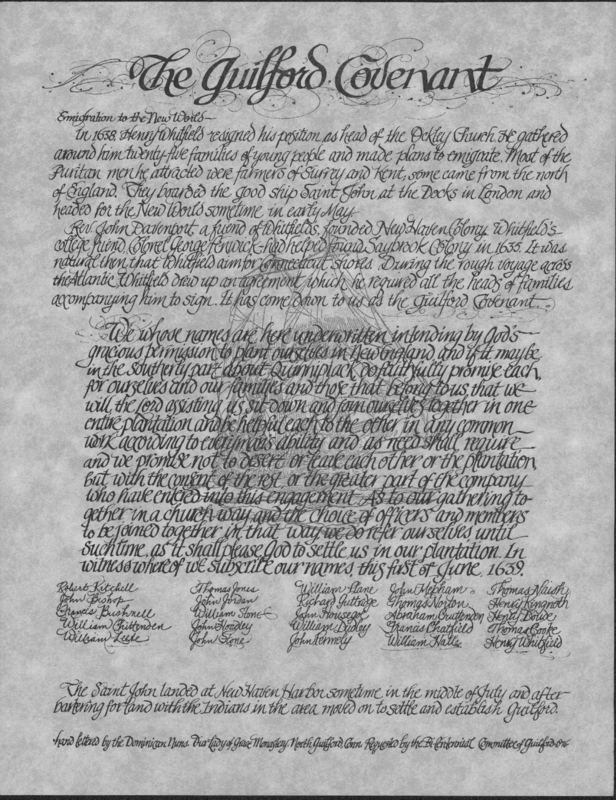
Hand written copy of the original founding document of the town of Guilford. Produced by the Dominican Nuns of Our Lady of Grace Monastery in North Guilford.
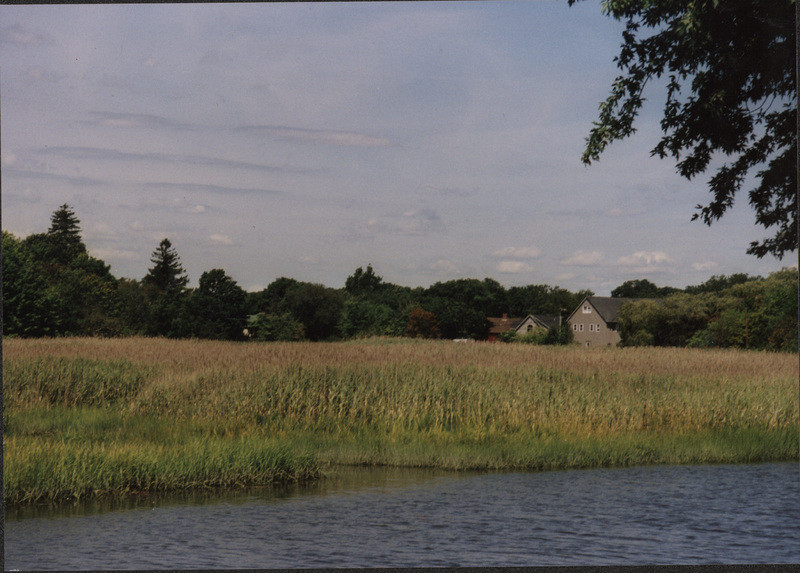
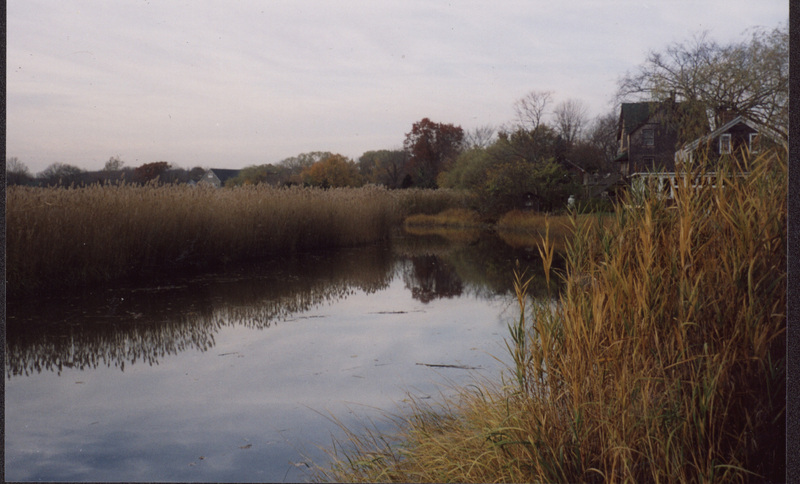
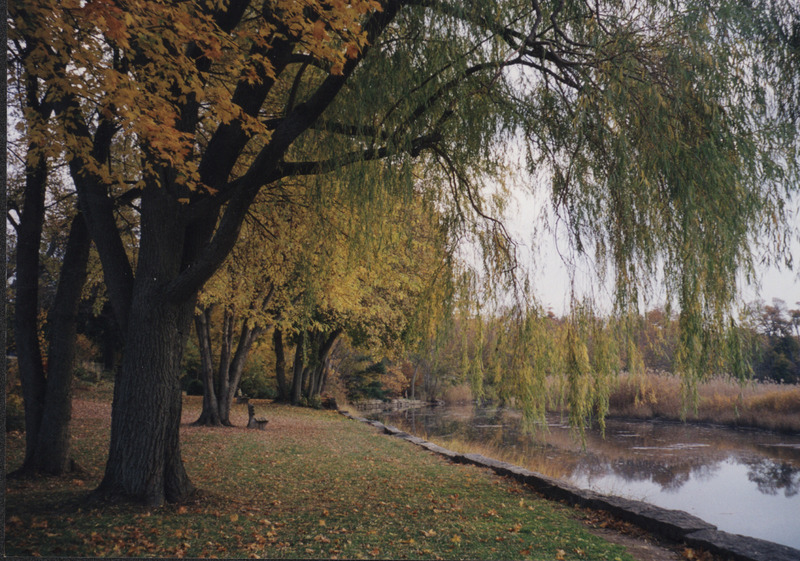
Olmsted's Outlook is a one-half acre parcel of land located at the end of Broad Street on River Street. The land, owned by the Guilford Land Conservation Trust, offers views of the West River and surrounding salt marshes.
Olmsted's Outlook, is a small public park, located at the base of Broad Street on River Road. The park, owned by the Guilford Land Conservation Trust, offers views of the West River and surrounding salt marshes.
Olmsted's Outlook, is a small public park, located at the base of Broad Street on River Road. The park, owned by the Guilford Land Conservation Trust, offers views of the West River and surrounding salt marshes.
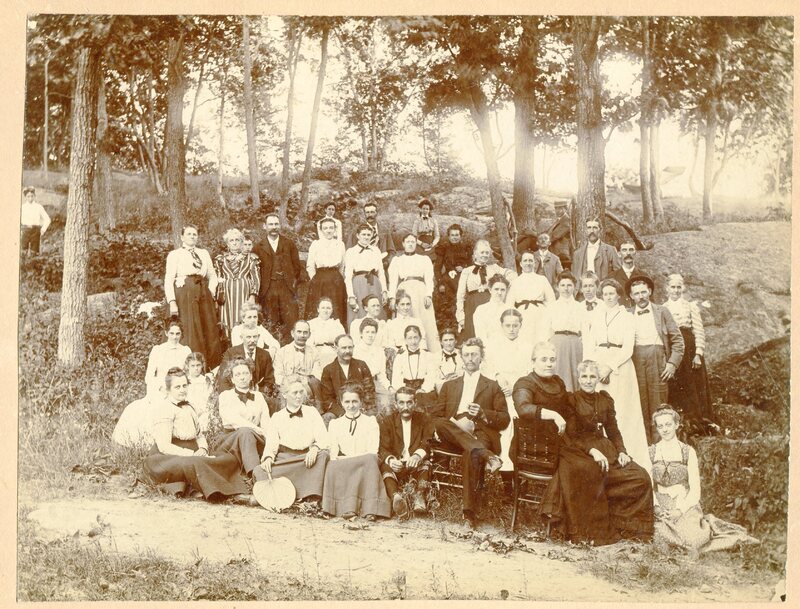
The Guilford chapter of the Women's Relief Corps is pictured in 1908. This photo marks the 20th anniversary of the group, which was originally organized by Mary E. Griswold and eleven other Guilford women, and called the Parmelee WRC, No. 32.
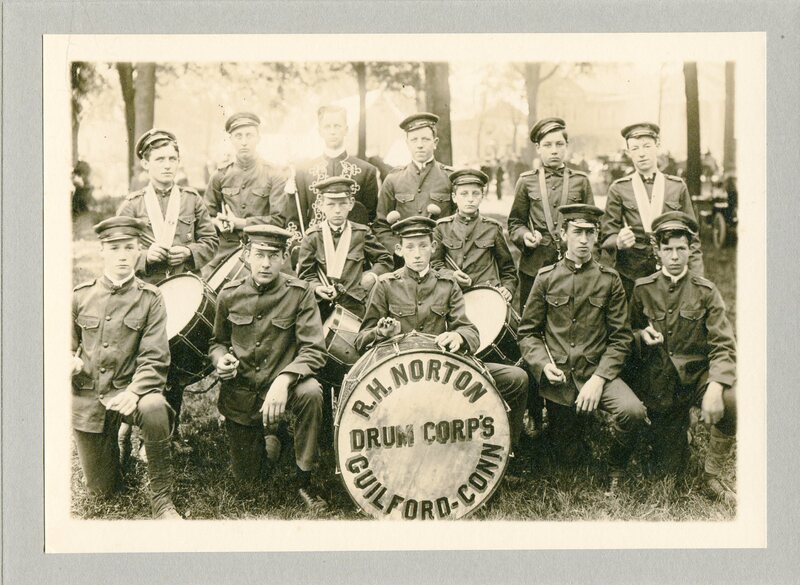
The members of the R.H. Norton Drum Corps are pictured.
Back row: Stephen Sullivan, G. Kenneth Cooper, Wm. F. Griswold, Howard Travers, Leslie R. Norton, George D. Sullivan. Center row: Robert H. Norton, Fridolph (?) Carlson. Front row: George Suelman, Paul Butler, Howard Dudley, Bob Lynch, Laurence Clayton.
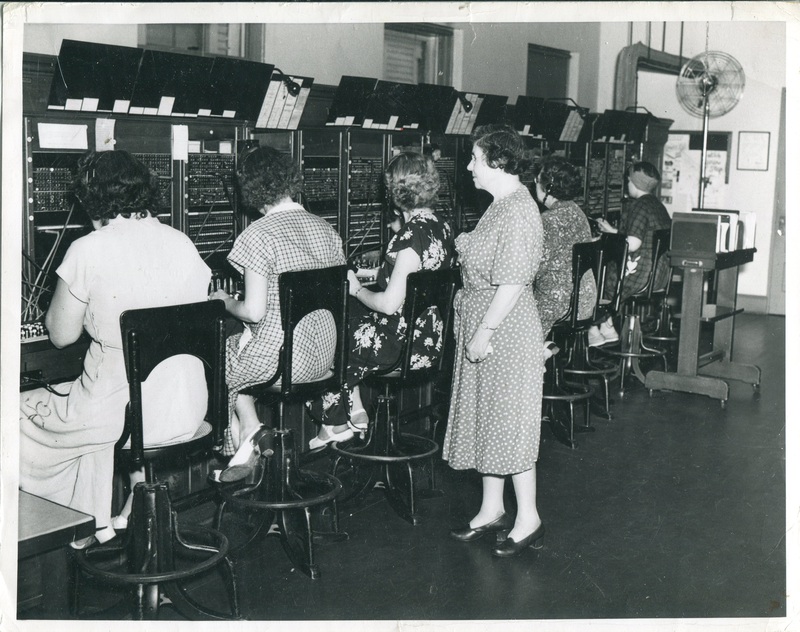
Florence Baldwin, supervisor, (standing) oversees the women working at the Guilford Switchboard. Pictured left to right: Frances Larkins, Vera Clapp, Mildred Thompson, Mabel Spencer and Shirley Dinwoodie.
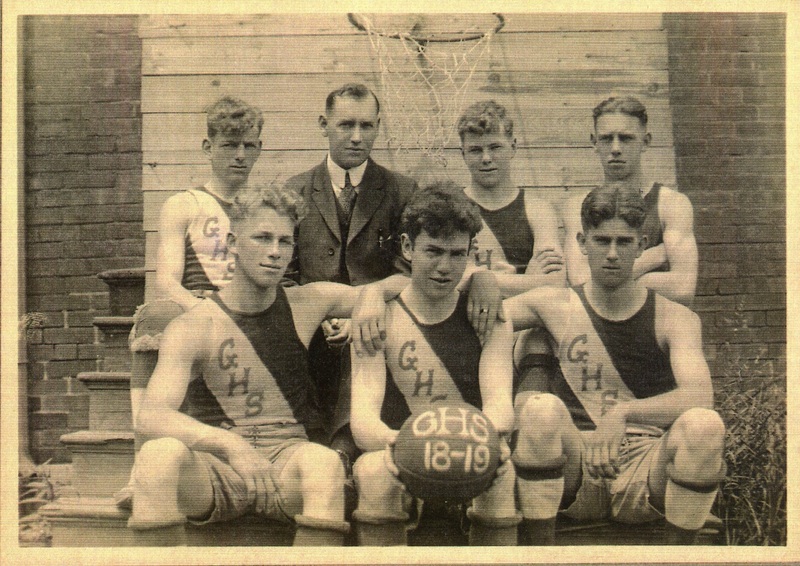
The Guilford High School Basketball Team, 1918-19, is pictured. Front row (left to right): Carlyle White, George Conway, Franklin Barker. Back row (left to right): Robert Norton, Mr. Hicks (principal), Merle Jillson, Richard Starr.
Guilford High School also had a girl's basketball team dating back to at least 1910.