Edith B. Nettleton Historical Room Photograph Collection
Title
Edith B. Nettleton Historical Room Photograph Collection
Description
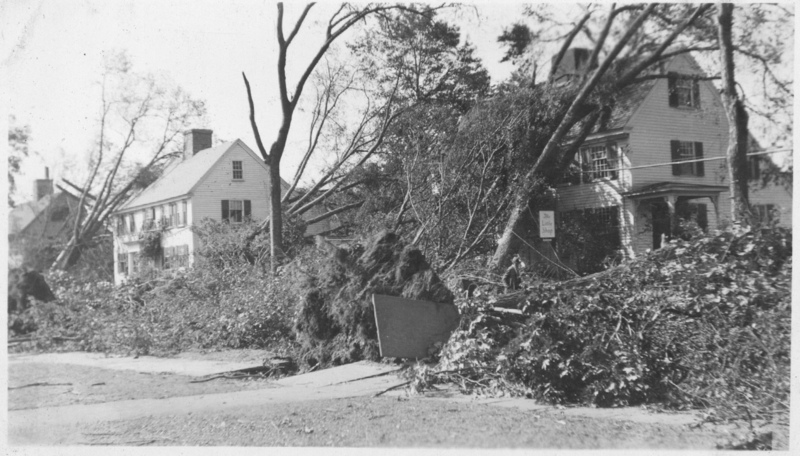
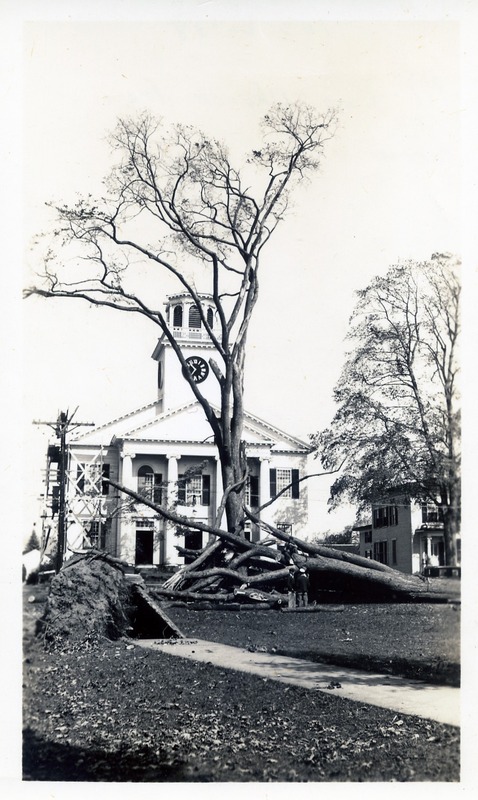
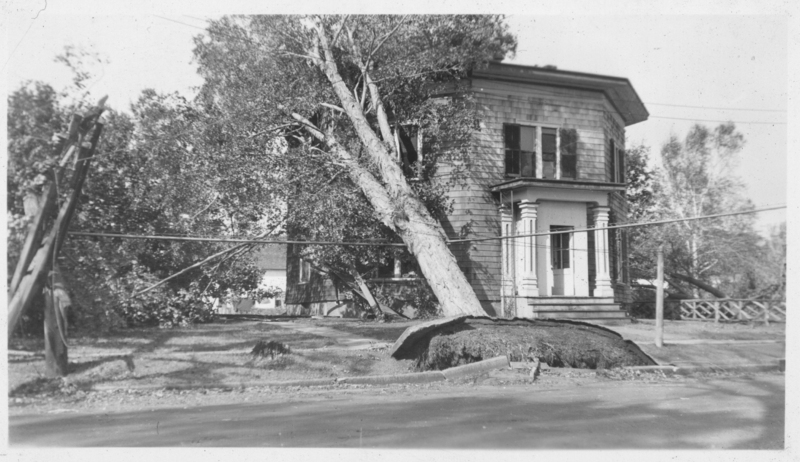
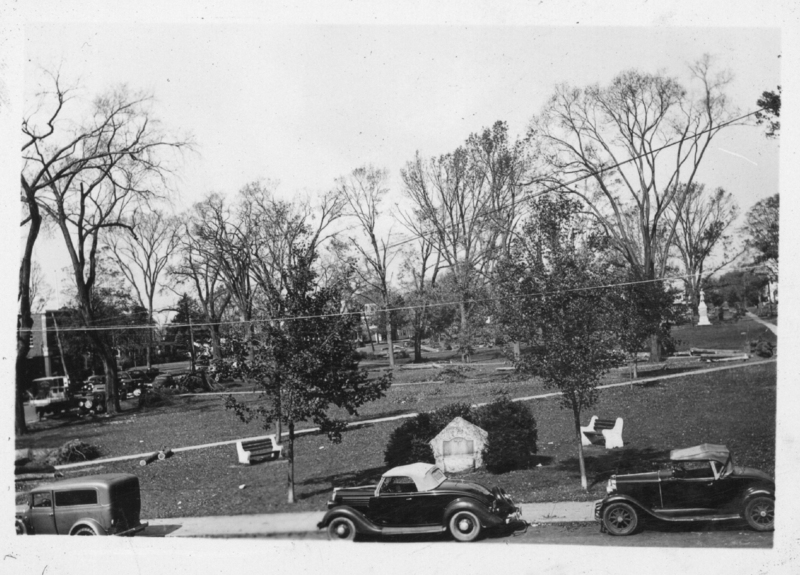
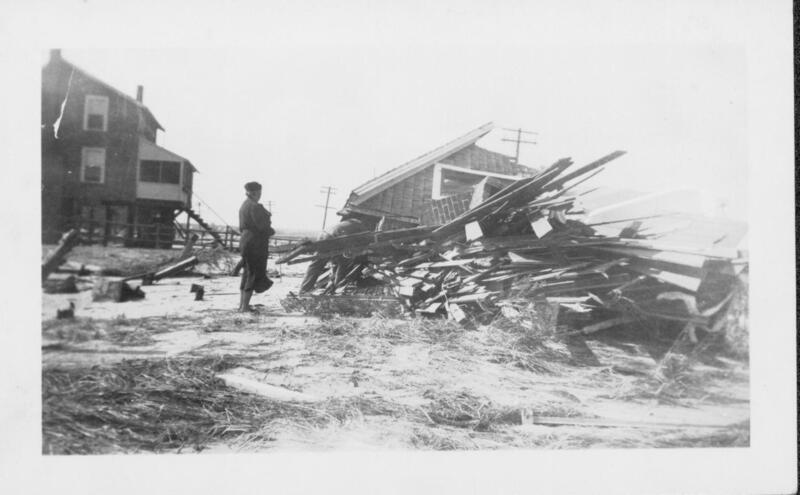
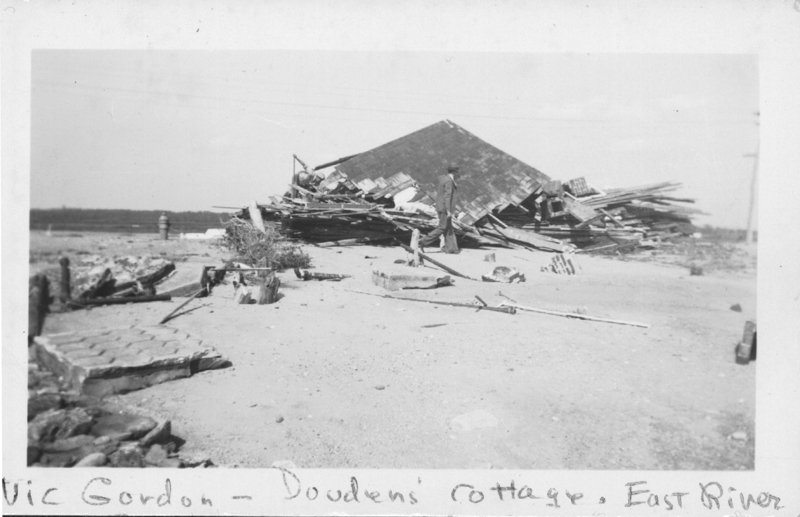
This collection includes hundreds of historical photos of Guilford and environs, including scenic views, portraits, activities, celebrations, events, homes and businesses. Highlights include several photos of the aftermath of the Hurricane of 38 as well as ...
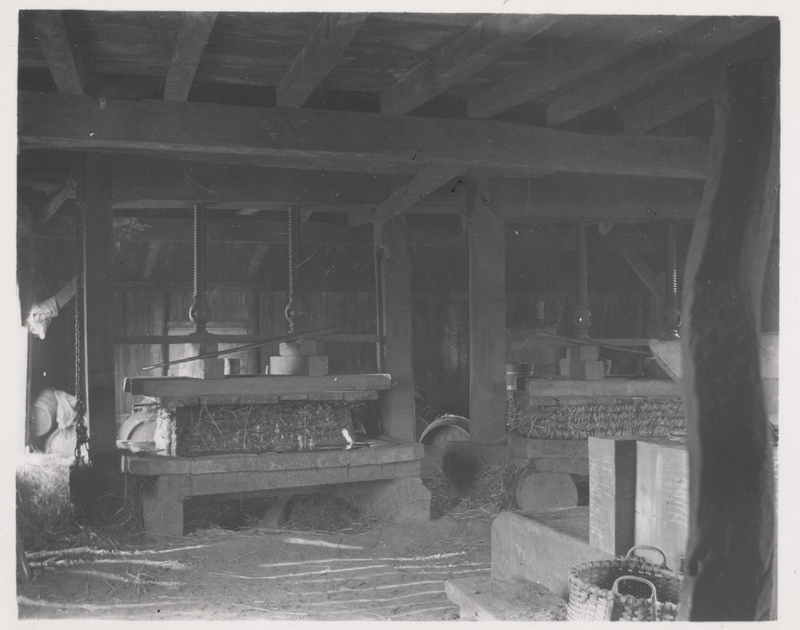
A Charles Hubbard photo of the interior of Harvey Leete's Blacksmith Shop. The shop was adjacent to the William Shelley House, 1139 Boston Post Road. Leete's home and shop were built in 1760 on York Road, which is now called Boston Post Road.
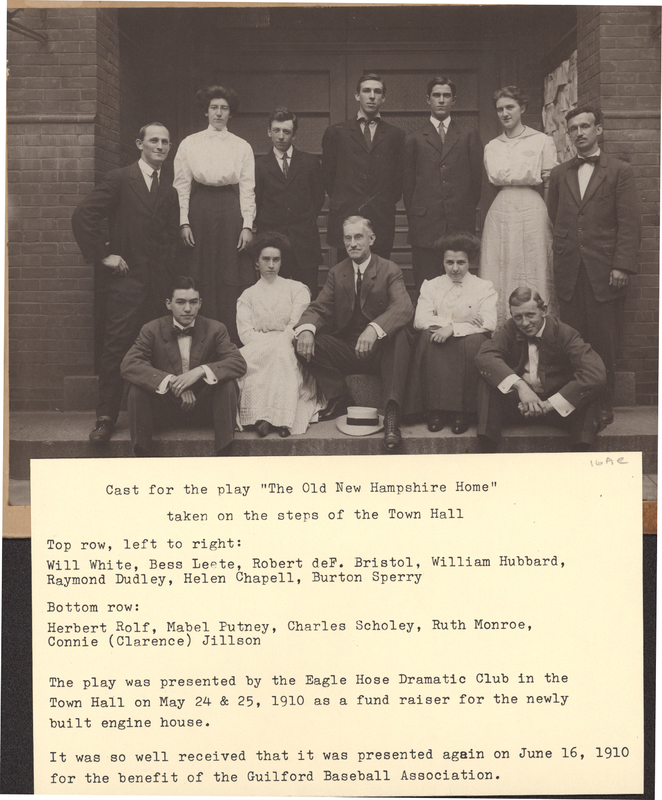
The cast of a production presented by Eagle Hose Dramatic Club of "The Old New Hampshire Home" is pictured on the steps of Town Hall. Performances were held May 24 and 25, 1910 as a fundraiser for the newly built Engine house.
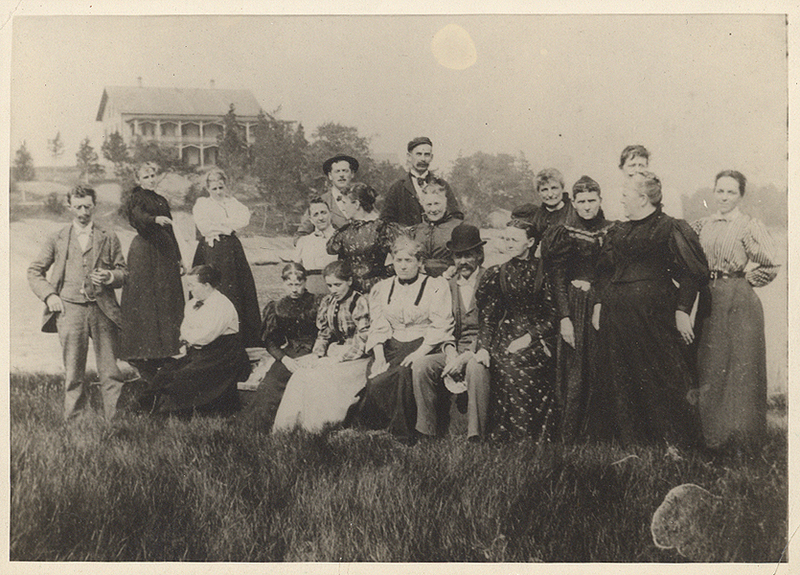
Ladies Auxiliary to Civil War Veterans, Relief Corps Picnic at Sachem's Head Hotel
Pictured, left to right (standing): George Bradley (sheriff), Alvira Benton (pictured pointing), Fannie Butler, George Wheeler, A.G. Somer (barber), Eva Lee, Mrs. Charles G. Gladwin. Middle row (standing): unidentified, Mrs. William Fowler, unidentified, Mrs. Heir, Mrs. White. Seated in front: Mrs. George Bradley, Carrie Rowland, Eva Jillson, Addie Chittenden, George Rolf (liveryman), Mrs. George Rolf, Chester Lee.
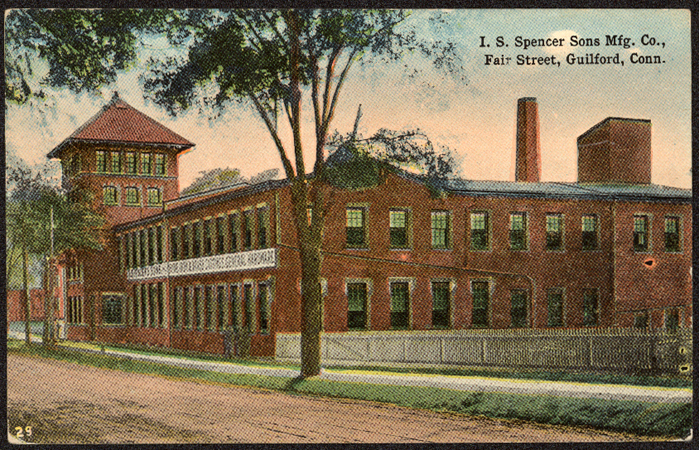
I.S. Spencer Sons Manufacturing Co., 20 Fair Street
From Sarah Brown McCulloch’s Guilford: A Walking Guide (2012):
"Here, on a prime residential street of architecturally outstanding houses, stood a working foundry until only seven years ago and the remarkable thing about it is
that no one thought it was unusual. In 1851 Isaac Stowe Spencer and his son Christopher bought a small foundry that was already working on this site, and through the years enlarged both business and building. By 1860 they employed five men making, chiefly, agricultural implements. In 1869 they added a brick foundry to the original building which was again enlarged in 1880. By then sixty men were employed making parts for bicycles, legs for school desks, lamp pedestals, Spencer scales, and other cast-iron products. In 1883 I. S. Spencer's Sons
built a brass foundry which produced brass and iron castings in demand all over the country. By 1904 Frederick C. Spencer, Isaac’s grandson, had become
president, and new stock appeared in the 1905 catalogue—doorbells, name plates, door knobs, brass attachments —in addition to their previous items. It was F. C. Spencer who in 1910 built the beautifully proportioned tower on the south side which has become a Guilford landmark....The Spencers continued in business until 1945. The firm ceased operations in 1982 and the building has been turned into condominiums."
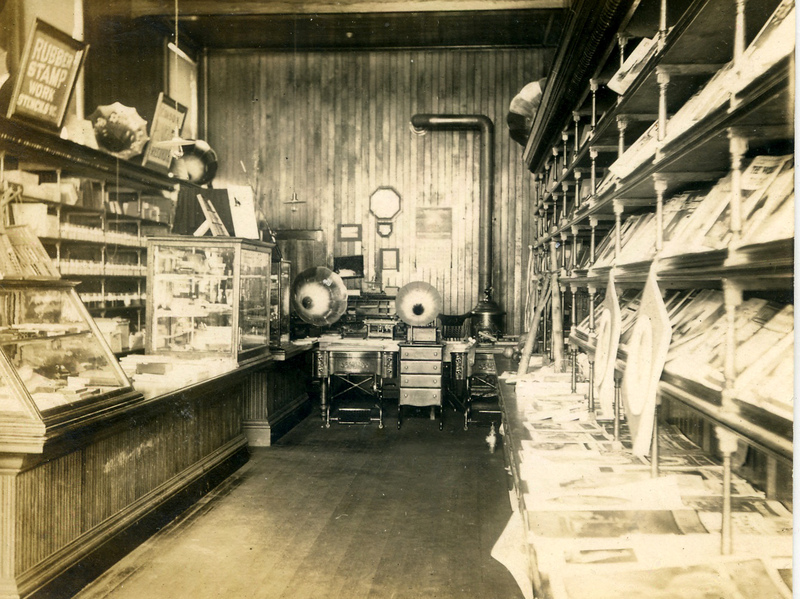
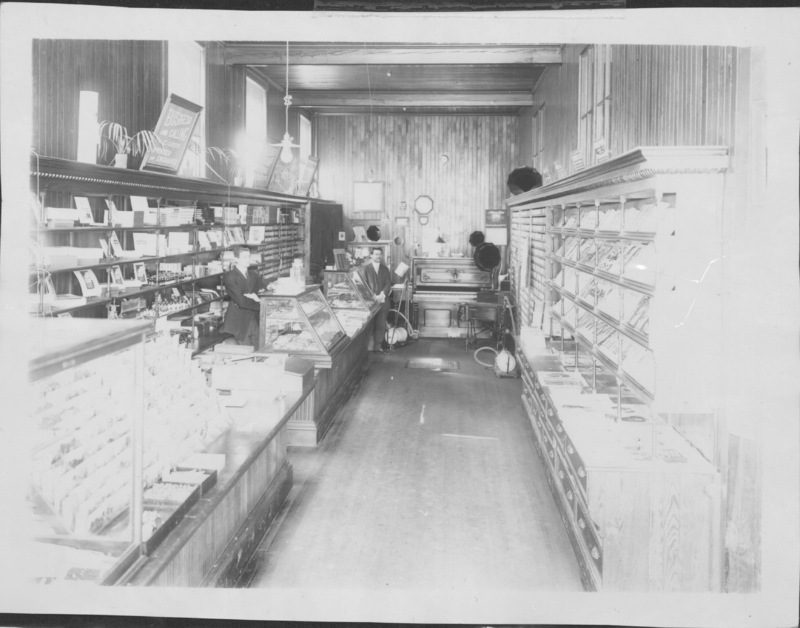
Robert Walker sold his radios in Dudley & Beckwith's store, located at 68 Whitfield Street. The large horns of the radios can be seen at the rear of the store, sitting atop sewing machines.
This image is from a postcard photo by O. B. Husted.
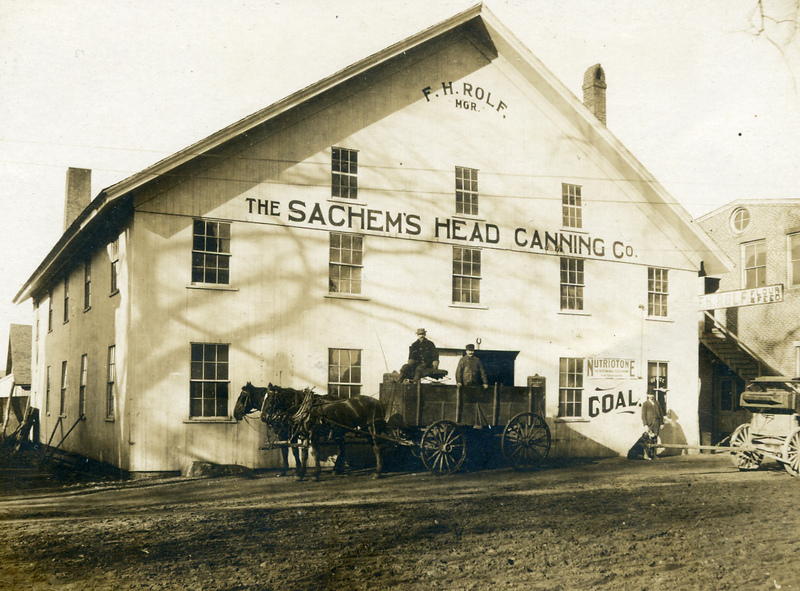
Incorporated in 1881, the Sachem's Head Canning Co. was owned by Fred H. Rolf and canned tomatoes and pumpkins at a capacity of 20,000 cans per day. In midseason, the company employed more than 100 people. Fred H. Rolf entered the coal business in 1905.
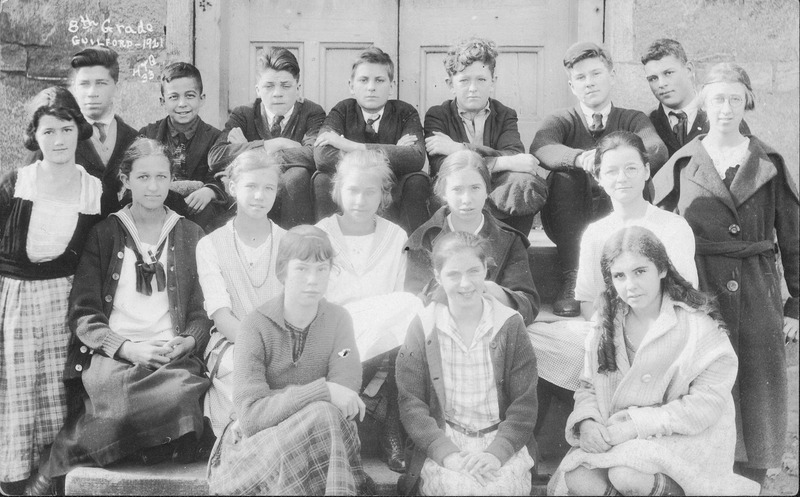
The 8th grade class of the Guilford Institute, 1921. Pictured left to right: (Standing) Florence Howarth, Charles Allan, Benjamin Cohen, Pete Coulter, Tom Whiteman, ? Green, Emory Morse, John Ashman, Hedwig Tetzlaff. Second row (seated): Edith B. Nettleton (salutorian), Esther Wilcox, Lillian Preuss, Helen Markhau, Edna Wilcox. Front Row: Helen Patch, Vivan Bergen, Edna Brown (valedictorian).
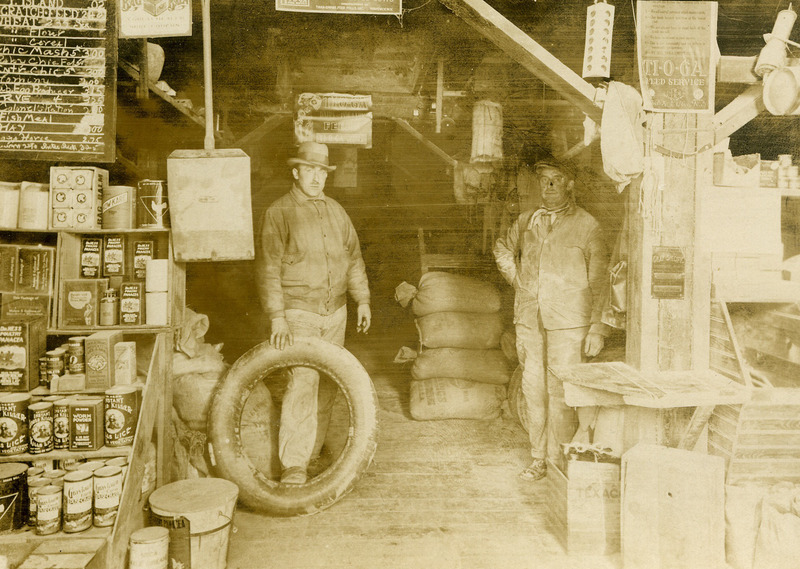
In 1897 Fred H. Rolf purchased from Darwin N. Benton his combined canning industry and feed business. Years later Rolf dropped the canning business and enlarged his feed and grain business. In 1919 John B. Hubbard joined Rolf as a business associate and in 1925 they incorporated the Fred H. Rolf business on Water Street, which had expanded into farm machinery and roofing materials as well as feed and grain. Fred Rolf is pictured on left.
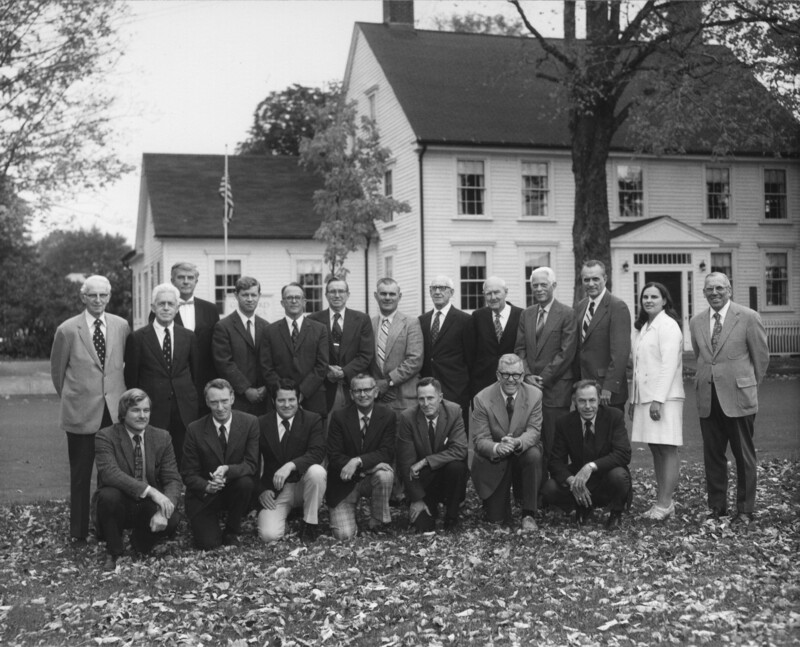
Standing, left to right: Irving W. Dudley (President Emeritus & Trustee), Ralph S. Brown, Jr. (Corporator), Hugh McK. Jones (Vice President & Trustee), David D. Dudley (Executive Vice President, Treasurer & Trustee), Gilbert M. Lombard (President & Trustee), H. Philip Dudley (Corporator), Edwin D. Bartlett (Trustee), Adelbert W. Cox (Vice President & Trustee), John E. Brainerd (Trustee), Egbert Broekhuysen (Trustee), Daniel Reinhardsen (Corporator), Kathleen H. Braren (Secretary & Asst. Treasurer & Corporator), Richmond H. Curtiss (Mortgage Officer & Trustee).
Kneeling, left to right: G. William Loveday (Corporator), Barry H. Cox (Corporator), H. Logan Page, III (Corporator), C. Merrill Stone (Corporator), Winthrop F. Smith (Corporator), Carter L. Cooley (Corporator), Russell W. Waldo (Corporator).
Absent: John M. C. Betts (Corporator), John B. Kidney (Trustee).
This building, the headquarters for the Guilford Savings Bank, was built in 1780 for John Redfield and later owned by the Landon family. It was built in typical style to larger homes at the time, with a chimney on each end a center hall and four rooms on each floor.
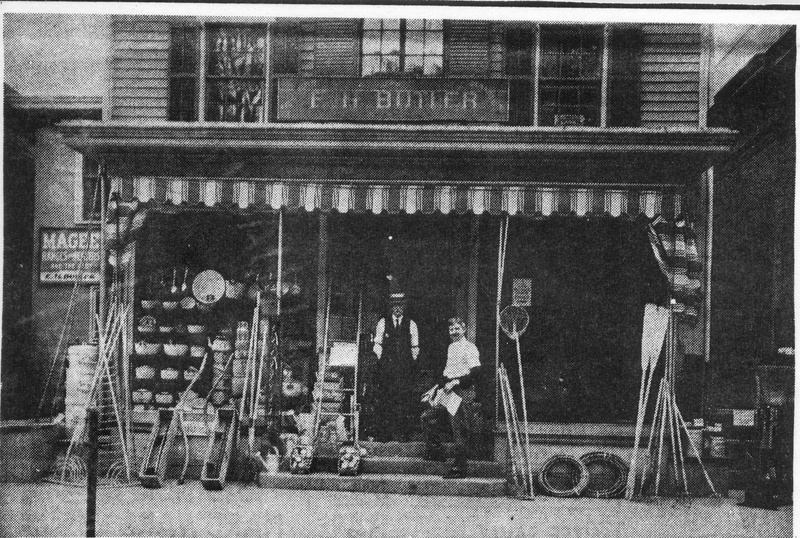
E.H. Butler Store, 9 Boston St.
"Although the style is mainly Greek Revival, the arched windows show a touch of the Italianate influence fashionable in the 1850s. The east section is a later addition, windows have been changed and shutters removed, but the building is still a well-maintained landmark. It has been a store from the time it was built [1858]by Jasper Monroe's son James. Jasper's son Beverly continued to run the business after the death of his father and brother, and by 1886 he had expanded the stock considerably, advertising 'dry goods, clothing, boots and shoes, hats, caps, paper hanging, carpets, crockery, paints, oils and choice FAMILY GROCERIES.' The Guilford Savings Bank began here with Monroe as its first treasurer using a safe in the back to hold deposits. In 1896 the building became the E. H. Butler Hardware Store and has been Page Hardware since 1939." From Guilford: A Walking Guide, by Sarah Brown McCulloch
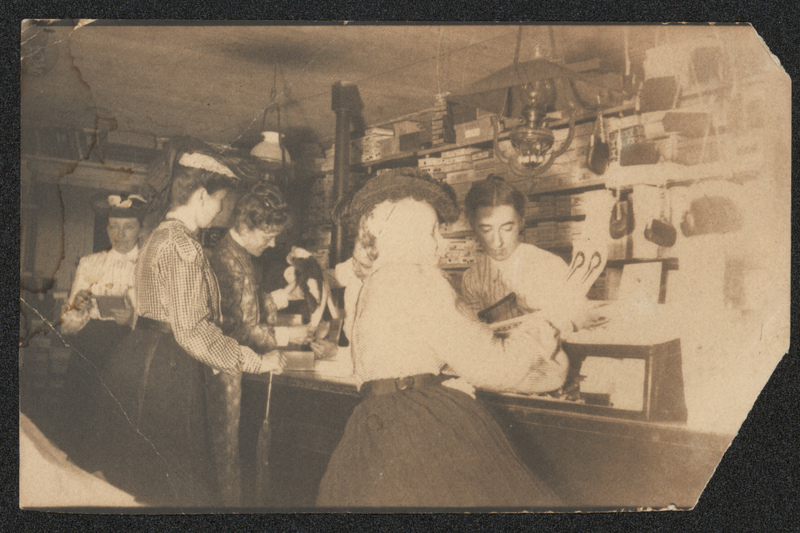
Leon Beckwith stands behind the counter with his arms crossed while Edmund Dudley is at the rear of the Dudley & Beckwith Store, circa 1930s. The store was located on the south side of Shore Line Times building at 68 Whitfield Street.
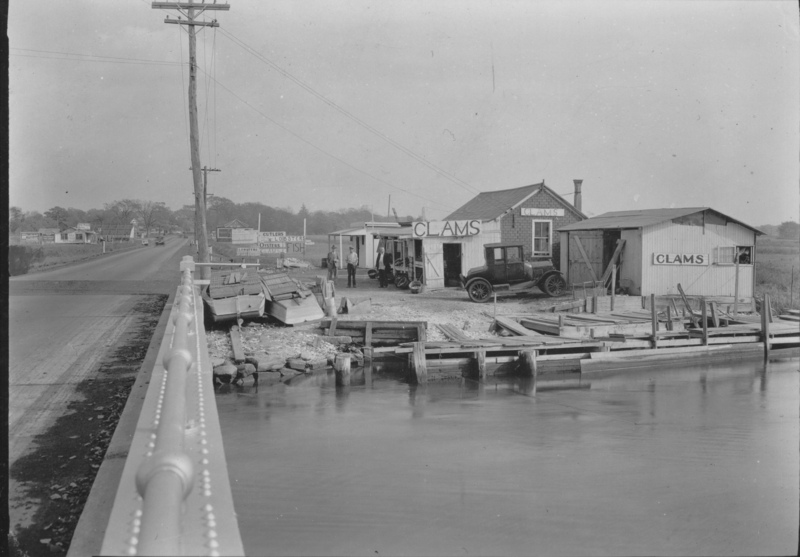
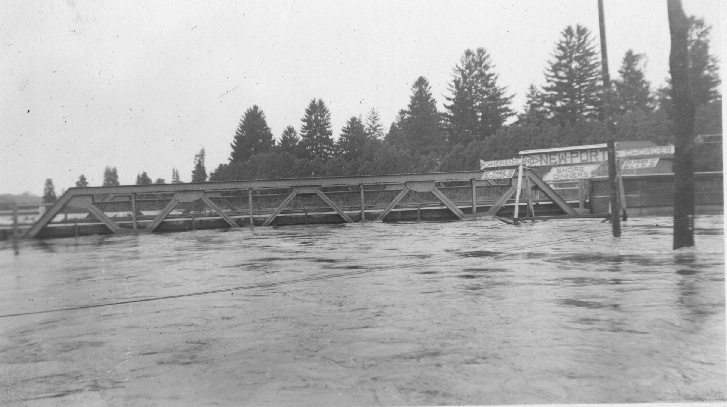
This photo is taken heading east crossing the East River Bridge. Cutler's Clams is located on right. Bassett's Restaurant (not seen in photo) is located across the street.
On the Green, looking north at the Congregational Church, whose steeple has been toppled. To the right of the church is former parsonage, moved to 28 Conway Drive in 1964.
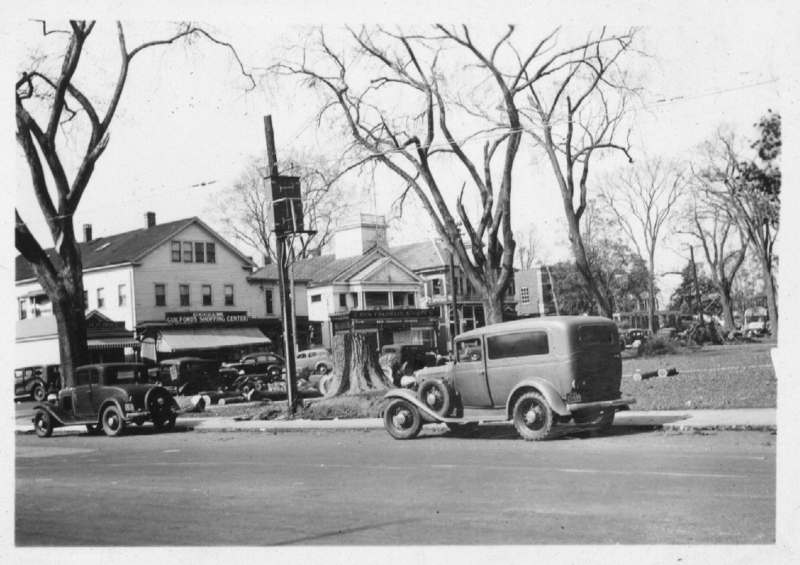
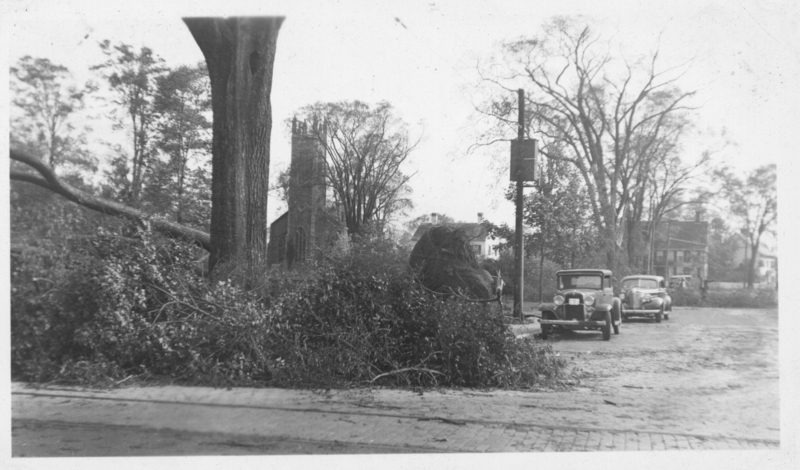
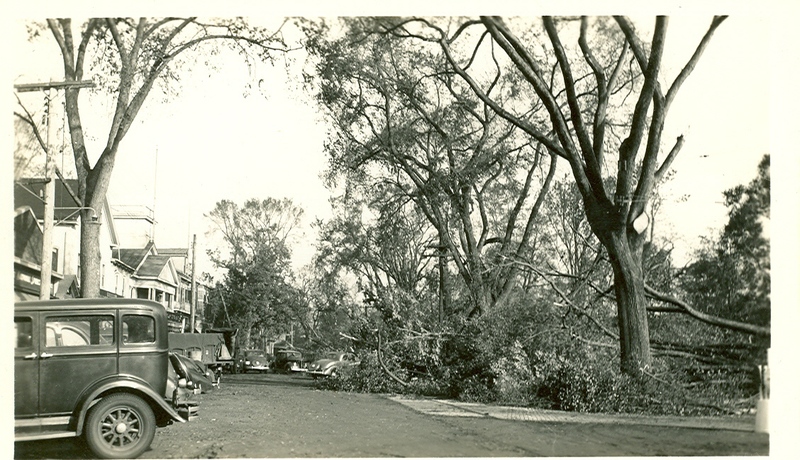
Facing east at the intersection of Boston and Whitfield Streets, at the southwest corner of the Guilford Green after the Hurricane of 1938. The steeple of Christ Episcopal Church is visible; to its right is 11 Park Street, the church’s rectory; on the corner of Park and Boston Streets is 1 Park Street (now Guilford Savings Bank). Bricks and trolley tracks are visible on the street in the foreground.
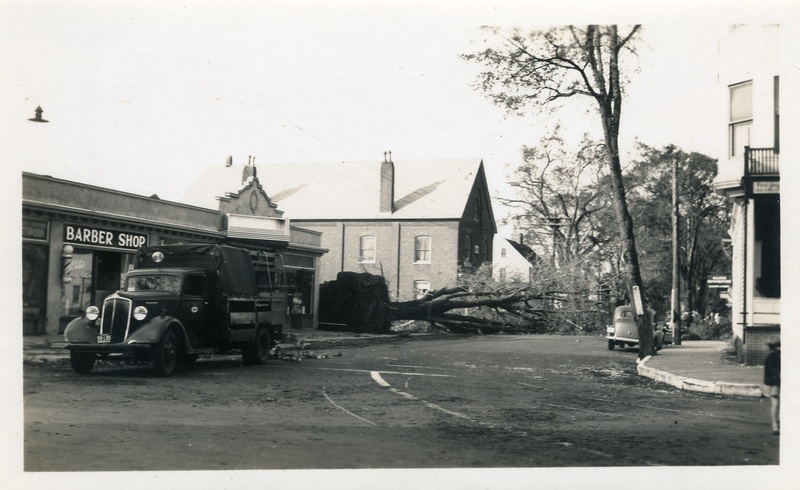
The corner of Water St. and Whitfield St. after the Hurricane of 1938. The large building beyond the fallen tree is Menuncatuck Odd Fellows Hall, 14 Water Street.
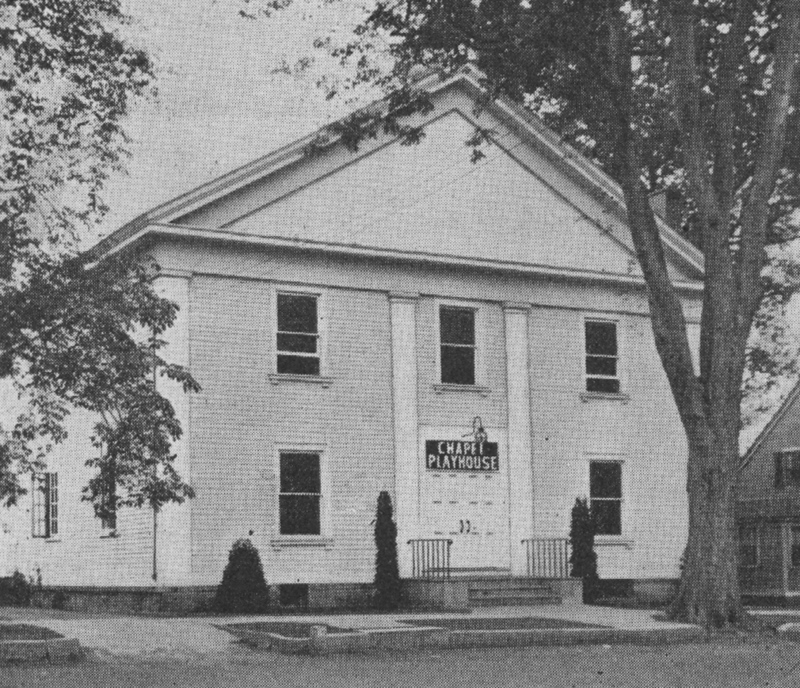
The Chapel Playhouse is pictured, circa 1940s.
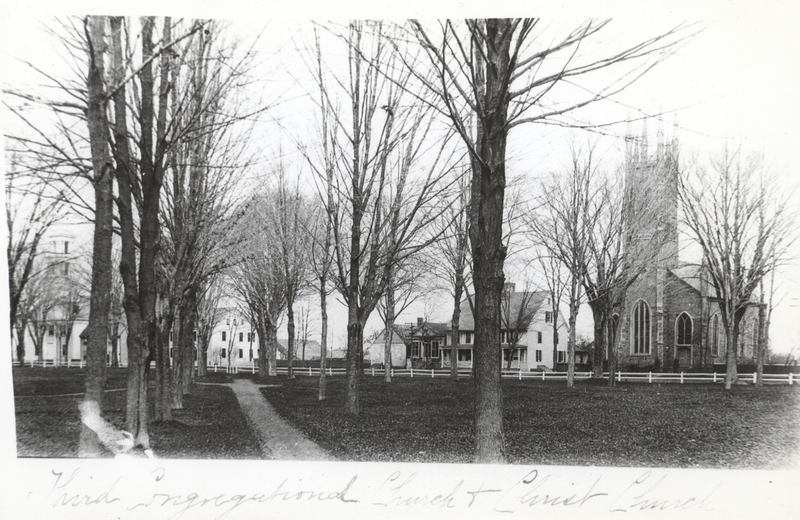
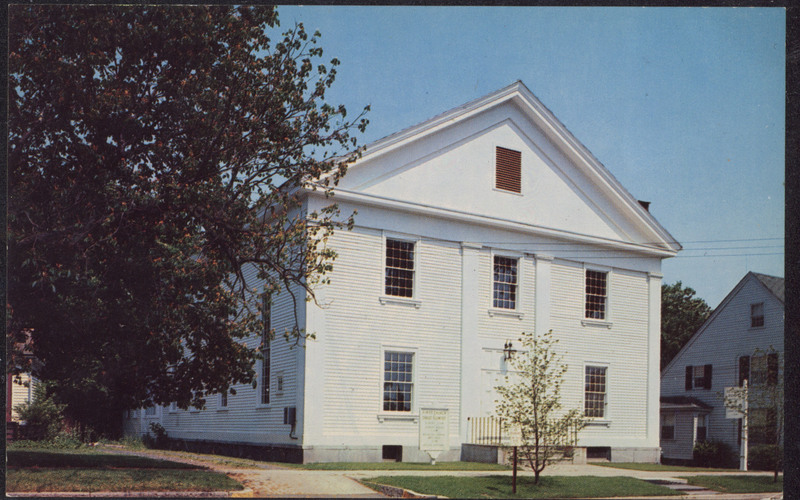
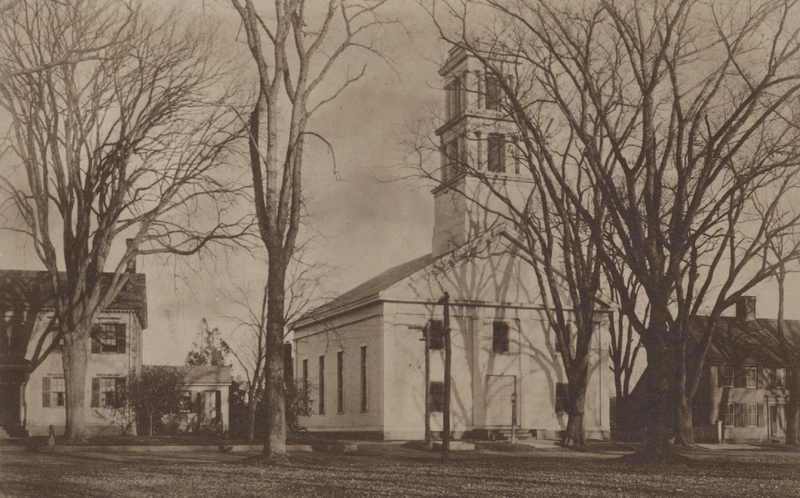
Built in 1844 on land bought from Samuel Landon. Outspoken Abolitionists, 123 friends of Rev. Aaron Dutton, split from the First Congregational Church in 1832 because they were refused permission to hold meetings of the local Anti-Slavery Society. First called the Abolition Church, it was formally established as the Third Congregational Church with Rev. David Root installed as the first pastor. Structural changes to the building included lowering the foundation in 1862 to add height to the main room and the seats, previously facing the entrance at the western end of the building, turned toward the new pulpit at the eastern end. A gallery was added at the same time. A chapel at the rear was added in 1879. The church was dissolved in 1919, and the building was sold to Christ Church, who used the chapel as a parish house. The rest of the building was used as a theater for showing serious films. The steeple was removed sometime during the 1920s when it began to lean. In 1933 it was resold to state Sen. Harry R. Durant and named Chapel Playhouse. The building was converted for use as a summer stock theater, the New York-Guilford Players, run by producer J. Burleigh and with plays produced by Lou Tellegen, and for the Guilford Town Players. The Christian Science Society bought and restored it in 1951 and in 1955 the society changed its title to First Church of Christ, Scientist.
To the left is the Major Lathrop House, 55 Park Street; to the right is 43 Park Street.
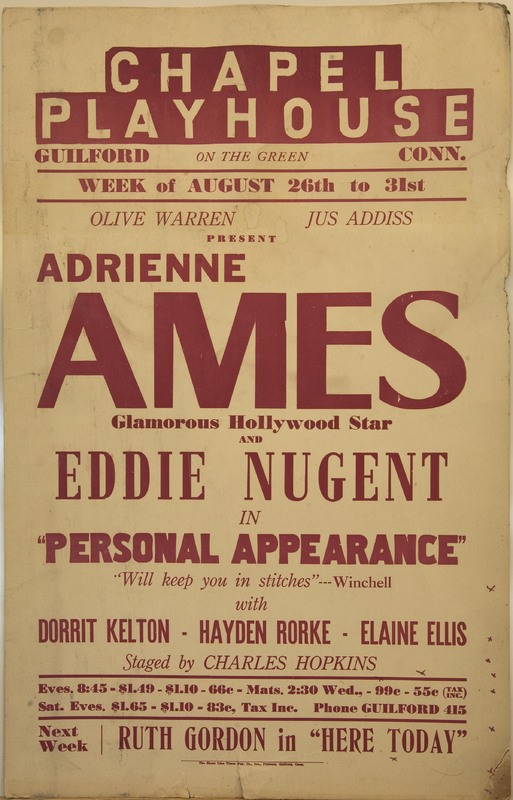
Theater placard from a Chapel Playhouse production on the Guilford Green. The theater company was housed at 49 Park Street during the 1930s and 40s.
Built in 1844 on land bought from Samuel Landon. Outspoken Abolitionists, 123 friends of Rev. Aaron Dutton, split from the First Congregational Church in 1832 because they were refused permission to hold meetings of the local Anti-Slavery Society. First called the Abolition Church, it was formally established as the Third Congregational Church with Rev. David Root installed as the first pastor. Structural changes to the building included lowering the foundation in 1862 to add height to the main room and the seats, previously facing the entrance at the western end of the building, turned toward the new pulpit at the eastern end. A gallery was added at the same time. A chapel at the rear was added in 1879. The church was dissolved in 1919, and the building was sold to Christ Church, who used the chapel as a parish house. The rest of the building was used as a theater for showing serious films. The steeple was removed sometime during the 1920s when it began to lean. In 1933 it was resold to state Sen. Harry R. Durant and named Chapel Playhouse. The building was converted for use as a summer stock theater, the New York-Guilford Players, run by producer J. Burleigh and with plays produced by Lou Tellegen, and for the Guilford Town Players. The Christian Science Society bought and restored it in 1951 and in 1955 the society changed its title to First Church of Christ, Scientist.
To the left is the Major Lathrop House, 55 Park Street; to the right is 43 Park Street.
The First Church of Christ Scientist at 49 Park Street now occupies the land which was the site for the Abolitionist Church in 1832. Built in 1844 on land bought from Samuel Landon. Outspoken Abolitionists, 123 friends of Rev. Aaron Dutton, split from the First Congregational Church in 1832 because they were refused permission to hold meetings of the local Anti-Slavery Society. First called the Abolition Church, it was formally established as the Third Congregational Church with Rev. David Root installed as the first pastor. Structural changes to the building included lowering the foundation in 1862 to add height to the main room and the seats, previously facing the entrance at the western end of the building, turned toward the new pulpit at the eastern end. A gallery was added at the same time. A chapel at the rear was added in 1879. The church was dissolved in 1919, and the building was sold to Christ Church, who used the chapel as a parish house. The rest of the building was used as a theater for showing serious films. The steeple was removed sometime during the 1920s when it began to lean. In 1933 it was resold to state Sen. Harry R. Durant and named Chapel Playhouse. The building was converted for use as a summer stock theater, the New York-Guilford Players, run by producer J. Burleigh and with plays produced by Lou Tellegen, and for the Guilford Town Players. The Christian Science Society bought and restored it in 1951 and in 1955 the society changed its title to First Church of Christ, Scientist.
To the left is the Major Lathrop House, 55 Park Street; to the right is 43 Park Street.
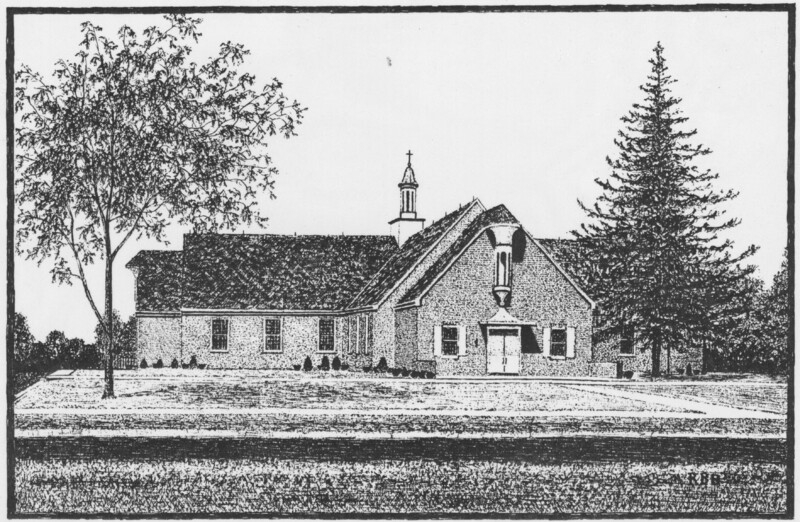
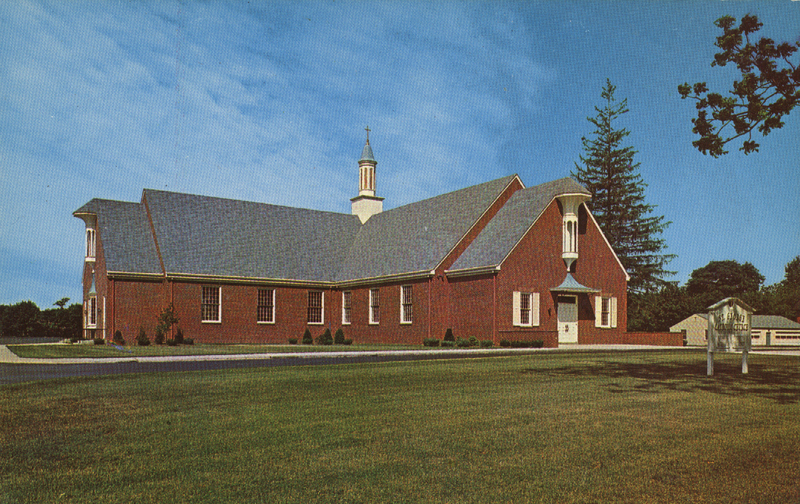
The Bonzano family gave the Catholic Church right of first refusal for their property at 47 Whitfield Street. The house was razed in 1962 and the present church was constructed in 1963.
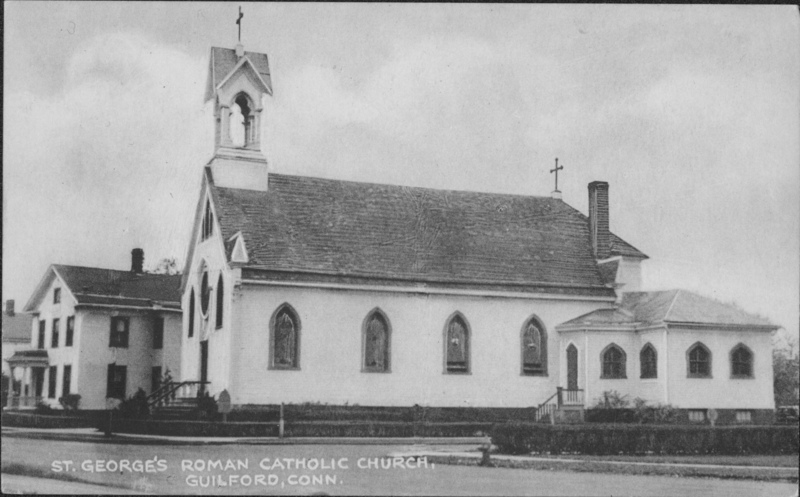
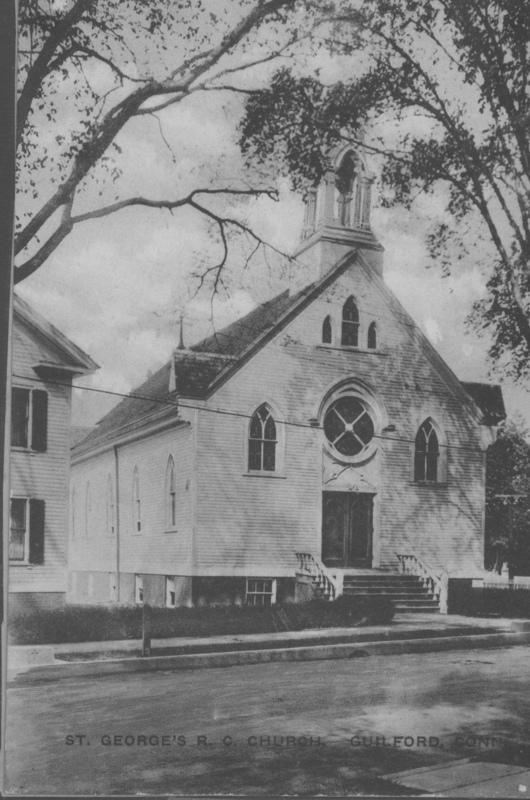
Looking south on Whitfield Street at the intersection of High Street shows St. George’ s Church from the side with Rectory just beyond. After construction of the church on the Green, this building was deconsecrated in 1963 and sold to St. Alban’s Lodge. It was privately converted to condominiums in 1986.
Postcard
Original St. George’ s Roman Catholic Church, 169 Whitfield St. Postcard by Henry S. Davis, ca. 1930. The cornerstone for the building at 169 Whitfield St. was laid in 1876, and the building was occupied in 1878. It was built on land belonging to the Hill family. George Hill converted to Catholicism in the 1860's, however the Roman Catholic population of Guilford remained small at only about 30 families.
Built in 1844 on land bought from Samuel Landon. Outspoken Abolitionists, 123 friends of Rev. Aaron Dutton, split from the First Congregational Church in 1832 because they were refused permission to hold meetings of the local Anti-Slavery Society. First called the Abolition Church, it was formally established as the Third Congregational Church with Rev. David Root installed as the first pastor. Structural changes to the building included lowering the foundation in 1862 to add height to the main room and the seats, previously facing the entrance at the western end of the building, turned toward the new pulpit at the eastern end. A gallery was added at the same time. A chapel at the rear was added in 1879. The church was dissolved in 1919, and the building was sold to Christ Church, who used the chapel as a parish house. The rest of the building was used as a theater for showing serious films. The steeple was removed sometime during the 1920s when it began to lean. In 1933 it was resold to state Sen. Harry R. Durant and named Chapel Playhouse. The building was converted for use as a summer stock theater, the New York-Guilford Players, run by producer J. Burleigh and with plays produced by Lou Tellegen, and for the Guilford Town Players. The Christian Science Society bought and restored it in 1951 and in 1955 the society changed its title to First Church of Christ, Scientist.
To the left is the Major Lathrop House, 55 Park Street; to the right is 43 Park Street.